
Between mid‑August and mid‑October 2026, Merck and Moderna reported what they described as the first positive Phase 3 readout for an individualized neoantigen therapy, though setbacks hit two BioNTech mRNA trials and a glioblastoma peptide vaccine. In infectious disease, Phase 3 data diverged: a 31‑valent pneumococcal conjugate vaccine met its primary endpoints, whereas a recombinant BCG vaccine did not demonstrate noninferiority against tuberculosis infection. Bundibugyo vaccine testing moved closer to the outbreak, and new investment targeted automated, cell‑based, and refrigerator‑free approaches to vaccine production and storage. In this Industry Update: Pandemic and global health Clinical trials Therapeutic vaccines Regulation and policy Manufacturing innovation Formulation and delivery Discovery and immunology |
Industry Insights: First mRNA‑based flu vaccine wins US approval, Moderna’s Ebola candidate reaches the clinic, and early‑phase cancer vaccine trials broaden across personalized and off‑the‑shelf platforms
Vaccine Insights 2026; 5(9), 475–483
10.18609/vac.2026.058
PANDEMIC AND GLOBAL HEALTH |
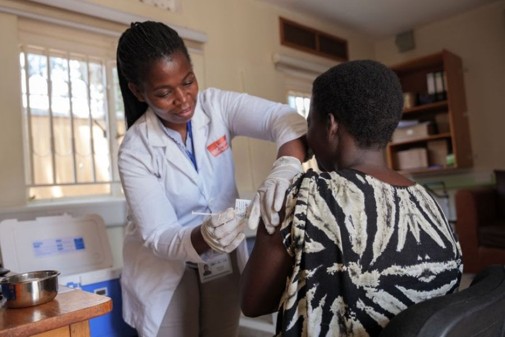 |
A participant receives a dose in the Phase 1 trial of the ChAdOx1 BDBV vaccine candidate in Masaka, Uganda; Pandemic and global health. Credit: MRC/UVRI. |
Testing of an Oxford Bundibugyo vaccine candidate moved into the region at the center of the outbreak [1]
Researchers at the Medical Research Council/Uganda Virus Research Institute and London School of Hygiene & Tropical Medicine Uganda Research Unit vaccinated the first participants in Masaka City on October 6, 2026, in a Phase 1 study of ChAdOx1 BDBV, an adenoviral‑vector vaccine candidate developed by the University of Oxford. It is the second trial of the vaccine, following a first‑in‑human study launched in the UK in July. The Uganda study will assess safety and immunogenicity in an African population as the Bundibugyo virus disease outbreak in the Democratic Republic of the Congo (DRC) continues. Serum Institute of India supplied approximately 3,000 investigational doses. CEPI, which funds both trials, has said it will support late‑stage development if early results are positive.
Immunity from Ervebo showed encouraging but inconsistent overlap with Bundibugyo virus in two human studies [2,3]
In a longitudinal study published in The Lancet, researchers analyzed 5,849 serum samples from 1,081 people in two outbreak‑affected regions of the DRC who had received Ervebo (rVSVΔG‑ZEBOV‑GP), a vaccine licensed against Zaire ebolavirus. In Beni, 52% of participants showed Bundibugyo glycoprotein seroreactivity at day 21. Patterns in Mbandaka were markedly different, and some participants were seroreactive before vaccination. In The Lancet Infectious Diseases, researchers at the German Center for Infection Research detected Bundibugyo glycoprotein‑reactive T cell responses in 13 of 20 vaccine recipients 28 days after vaccination. Neither study measured protection, but together they add to the rationale for evaluating Ervebo clinically during the current outbreak.
An adaptive trial built to test several vaccines at once will put Ervebo first against Bundibugyo virus in the DRC [4]
Tumaini, meaning hope in Swahili, is a pivotal Phase 2/3 adaptive platform trial that will evaluate several vaccine candidates against Bundibugyo virus within a single framework. Candidates will be assessed for safety, immunogenicity, and efficacy using ring vaccination of high‑risk contacts. The trial is co‑sponsored by the Institut National de Recherche Biomédicale and the University of Antwerp, and funded through CEPI. On the recommendation of WHO advisers, Ervebo is expected to be evaluated first. Bundibugyo‑specific candidates from Moderna and from the University of Oxford with Serum Institute of India would enter as they become available. As of October 13, 2026, the trial was expected to begin within weeks, subject to ethical and regulatory approval.
Gavi’s maternal respiratory syncytial virus vaccine program gained the multi‑dose presentation it had been waiting for [5,6]
On September 9, 2026, WHO prequalified a multi‑dose vial of Pfizer’s maternal respiratory syncytial virus (RSV) vaccine RSVpreF (Abrysvo), following prequalification of the single‑dose presentation in March 2025. Gavi had made a prequalified multi‑dose vial a condition for starting its 2026–2030 maternal RSV vaccine program, which can now move toward introduction in Gavi‑supported countries. The lower‑cost multi‑dose format, developed with support from the Gates Foundation, is intended to make large‑scale introduction into national programs more feasible. According to Gavi, more than 97% of RSV‑related child deaths occur in lower‑income countries.
India’s first domestically developed HPV vaccine became eligible for UN procurement [7]
WHO has prequalified Cervavac, a recombinant quadrivalent HPV vaccine developed by Serum Institute of India that targets types 6, 11, 16, and 18. The vaccine is indicated for girls and boys aged 9–26 years and was previously approved for domestic use by the Drugs Controller General of India. It was developed with India’s Department of Biotechnology and the Biotechnology Industry Research Assistance Council, alongside the International Agency for Research on Cancer and the Gates Foundation. Prequalification allows UN agencies to procure the vaccine, opening a route for an additional HPV vaccine to reach national immunization programs. Cervavac is the company’s 32nd WHO‑prequalified product.
CLINICAL TRIALS |
Broader serotype coverage came largely without loss of immune response in a pivotal 31‑valent pneumococcal vaccine trial [8]
OPUS‑1 is a randomized, double‑blind, active‑controlled Phase 3 trial in 4,047 US adults who had not previously received a pneumococcal vaccine. In adults aged 50 years and older, Vaxcyte’s VAX‑31 met all prespecified primary immunogenicity endpoints. All 28 serotypes shared with Prevnar 20 and/or Capvaxive met the noninferiority criterion for opsonophagocytic activity, and the three serotypes unique to VAX‑31 met superiority criteria. In the individual comparison with Capvaxive, serotypes 3 and 12F missed the stricter noninferiority threshold but met the historical one. Safety was similar to the comparators. Results from two further Phase 3 trials are expected in the first half of 2027, ahead of a planned Biologics License Application in the first half of 2028.
A recombinant BCG vaccine failed to match standard BCG against tuberculosis infection in African newborns [9]
Bacille Calmette‑Guérin (BCG) offers incomplete protection against pulmonary TB, and the recombinant vaccine VPM1002 was developed to address this gap. The double‑blind, randomized Phase 3 priMe trial compared the two vaccines in 6,950 newborns at 14 sites in five sub‑Saharan African countries, including 720 born to mothers living with HIV. The primary measure was QuantiFERON‑TB Gold Plus conversion, a marker of Mycobacterium tuberculosis infection. Over a median follow‑up of 35 months, conversion occurred in 5.3% of infants given VPM1002 and 4.3% of those given BCG (hazard ratio 1.23; 95% CI: 0.99–1.53), exceeding the prespecified noninferiority margin of 1.25. The trial ended early after accruing 334 of 632 planned infections. The authors noted that reliance on a surrogate endpoint complicates interpretation.
GSK chose a neuraminidase‑containing mRNA formulation for late‑stage influenza testing [10]
GSK’s multivalent mRNA seasonal influenza vaccine candidates encode both hemagglutinin and neuraminidase, the two primary surface antigens of the virus. In the randomized, observer‑blind Phase 2 Flu‑028 trial in 971 adults, they generated higher immune responses against all strains tested than licensed standard‑dose vaccines in adults aged 18–64 years and licensed high‑dose vaccines in those aged 65 years and older. The candidates were generally well tolerated. After presenting the data at the Options XIII Conference for the Control of Influenza, GSK selected the optimized B‑strain hemagglutinin candidate, FLUm3HA.b‑3NA, for a Phase 3 efficacy trial scheduled to begin in September 2026. The company described it as the first late‑stage trial of an mRNA influenza vaccine targeting both antigens.
A nucleoprotein‑targeting influenza vaccine fell short as a standalone shot and was repositioned as a combination partner [11,12]
Osivax’s OVX836 targets the nucleoprotein, a conserved internal antigen, and is designed to induce broad cellular immunity against influenza A. Asuniva, a randomized, double‑blind, placebo‑controlled Phase 2b field efficacy trial, enrolled 2,850 healthy adults in Belgium, France, Finland, and Germany. OVX836 did not meet its prespecified primary endpoint of 50% vaccine efficacy, although the company reported a consistent efficacy signal across both major influenza A subtypes. Osivax will prioritize single‑injection combinations with seasonal vaccines. An August 2026 agreement grants it a non‑exclusive global license, excluding Japan and Korea, to combine OVX836 with GC Biopharma’s WHO‑prequalified GC FLU vaccine. A second agreement is with an undisclosed partner. A first Phase 1/2 combination study is planned for the fourth quarter of 2027.
Combining three respiratory virus antigens did not dampen antibody responses in older adults [13]
Clover Biopharmaceuticals reported preliminary data from a randomized, observer‑blinded Phase 2 trial in 420 adults aged 60–85 years in Australia. Participants received SCB‑1022 (RSV and human metapneumovirus), SCB‑1033 (which adds parainfluenza virus type 3), or placebo. Both protein‑based candidates use prefusion‑stabilized F antigens produced on the company’s Trimer‑Tag platform. At 28 days, neutralizing antibodies rose approximately 6–9‑fold against RSV and 6–8‑fold against human metapneumovirus. Adding the parainfluenza antigen showed no sign of interfering with these responses, and there was no drop‑off in participants aged 75 years and older. No vaccine‑related serious adverse events occurred. Clover has also produced multiple antigen batches at 2,000 L bioreactor scale and will evaluate later‑stage development plans and potential partnerships.
Recipients of the recombinant shingles vaccine had a lower cardiovascular burden than recipients of its live predecessor [14]
In October 2017, the US rapidly switched from the live attenuated shingles vaccine Zostavax to the recombinant vaccine Shingrix. University of Oxford researchers used this transition to compare more than 70,000 adults aged 60 years and older vaccinated immediately before or after the switch. The design was intended to reduce the confounding inherent in comparing vaccinated with unvaccinated people. Published in Nature Medicine, the analysis found that Shingrix was associated with a 9% lower cardiovascular disease burden than Zostavax over 7 years, including reductions in ischemic heart disease and heart failure. The authors concluded that the results justify clinical trials and mechanistic studies of potential cardioprotective effects. The same group previously reported an association between Shingrix and reduced dementia risk.
THERAPEUTIC VACCINES |
 |
Low‑poly illustration representing a cancer vaccine targeting a tumor cell; Therapeutic vaccines. Credit: iStock. |
An individualized neoantigen therapy improved on checkpoint inhibition alone in a Phase 3 melanoma trial [15]
INTerpath‑001 is a randomized, double‑blind, placebo‑ and active‑comparator‑controlled Phase 3 trial in 1,137 patients with completely resected stage IIB–IV cutaneous melanoma. Patients received intismeran autogene (V940/mRNA‑4157) or placebo, each with pembrolizumab. At a prespecified interim analysis, Merck and Moderna reported that the combination met the primary endpoint of recurrence‑free survival and the key secondary endpoint of distant metastasis‑free survival, with statistically significant improvements in both. No new safety signals were observed. The companies described the result as the first positive Phase 3 readout for an individualized neoantigen therapy. Effect sizes were not disclosed in the topline announcement. Overall survival follow‑up continues, within a nine‑trial program spanning melanoma, non‑small cell lung, bladder, and renal cancers.
Two BioNTech mRNA cancer immunotherapy trials reported setbacks [16,17]
BioNTech terminated the Phase 2 BNT122–01 trial of autogene cevumeran, an individualized mRNA cancer immunotherapy co‑developed with Genentech. It was tested as adjuvant monotherapy in resected colorectal cancer positive for circulating tumor DNA. The data safety monitoring board identified a numerical imbalance in overall survival between arms and judged continuation unlikely to change the efficacy outcome; no new safety signals were identified. Separately, the Phase 2/3 AHEAD‑MERIT trial is testing BNT113, an off‑the‑shelf mRNA immunotherapy encoding HPV16 E6 and E7 antigens, with pembrolizumab in first‑line recurrent or metastatic HPV16‑positive head and neck squamous cell carcinoma. It missed its first dual primary endpoint, progression‑free survival. The trial continues to its overall survival endpoint, which alone could establish a positive outcome.
A survivin‑targeted peptide vaccine missed its overall survival endpoint in newly diagnosed glioblastoma [18]
MimiVax’s SurVaxM, developed with Roswell Park Comprehensive Cancer Center, was added to standard‑of‑care temozolomide in the randomized, double‑blind Phase 2b SURVIVE trial, which included 233 evaluable patients at 11 US centers. Median overall survival was 22.8 months with SurVaxM and 20.3 months with placebo. The difference did not reach statistical significance (hazard ratio 0.75; 95% CI: 0.54–1.03). The investigators noted that the placebo arm outperformed the 16‑month survival benchmark assumed in the trial design. In a prespecified subgroup of patients aged 65 years and younger, the sponsor reported a statistically significant survival benefit. SurVaxM holds orphan drug and fast track designations from the US FDA, and MimiVax plans to discuss potential expedited pathways with the agency.
An individualized viral‑vector cancer vaccine kept every treated head and neck cancer patient relapse‑free over a median 41 months [19]
Transgene’s TG4050 is built on the company’s Modified Vaccinia Ankara‑based myvac platform. It uses NEC’s artificial intelligence system to select up to 30 neoantigens for each patient. The randomized Phase 1 portion of a Phase 1/2 trial enrolled patients with resected, locally advanced HPV‑negative head and neck squamous cell carcinoma. All 16 patients given TG4050 as adjuvant monotherapy remained disease‑free at a median follow‑up of 41 months, while three of 16 patients in the control arm relapsed. Data published in Nature Communications showed vaccine‑induced responses in 73.3% of treated patients. Neoantigen‑specific CD8‑positive T cell responses persisted beyond 1 year after the last dose. Phase 2 disease‑free survival data are expected by the first quarter of 2028.
An HPV16‑targeted peptide immunotherapy given with pembrolizumab was associated with prolonged survival in a single‑arm study [20]
The nonrandomized Phase 2 VERSATILE‑002 trial, published in JAMA Oncology, enrolled 88 patients with recurrent or metastatic HPV16‑positive head and neck squamous cell carcinoma at 26 centers in the US, UK, and Ireland. Patients received pembrolizumab with PDS Biotech’s PDS0101, which combines HPV16 E6 and E7 multiepitope peptides with a T cell‑activating cationic lipid platform. In checkpoint inhibitor‑naive patients with a PD‑L1 combined positive score of at least 1, the objective response rate by central review was 34% and median overall survival was 39.3 months. In the checkpoint inhibitor‑resistant cohort, median overall survival was 14.8 months. The authors cautioned against cross‑trial comparisons given the single‑arm design. PDS Biotech is seeking partners to fund Phase 3 development.
REGULATION AND POLICY |
US approvals of updated COVID‑19 vaccines limited eligibility to older and high‑risk groups [21–23]
On August 27, 2026, the US FDA approved 2026–2027 formulations of four COVID‑19 vaccines, each updated to target the JN.1‑lineage XFG variant. They are Pfizer and BioNTech’s Comirnaty, Moderna’s Spikevax and mNEXSPIKE, and Nuvaxovid, a protein‑based vaccine developed by Novavax and commercialized by its partners. The approvals cover adults aged 65 years and older and younger people with at least one condition that places them at high risk of severe COVID‑19. The minimum age for high‑risk use varies by product. XFG‑adapted Nuvaxovid was also approved in the European Union and Japan.
A US FDA rule clarified that non‑animal methods can support safety testing of drugs and biologics [24]
The US FDA issued a direct final rule on September 21, 2026, replacing terms such as ‘animal studies’ with nonclinical studies throughout its regulations. The change clarifies that new approach methodologies, including human cell‑based assays, organs‑on‑chips, and computational models, can be used where appropriate to generate safety data for drugs and biological products before testing in humans. The agency stated that the rule does not eliminate or prohibit animal studies or change existing safety standards. It will be withdrawn if significant adverse comments are received. It was announced alongside wider Department of Health and Human Services initiatives on human‑based research.
EU regulators made Sanofi’s flu vaccine marketing commitments legally binding [25]
The European Commission had preliminary concerns that Sanofi’s communications to healthcare professionals in Germany and France, between 2024 and autumn 2025, misrepresented national vaccination recommendations. They also suggested that CSL Seqirus’s enhanced influenza vaccine Fluad had a weaker evidence base than Sanofi’s Efluelda. After a market test of Sanofi’s proposed commitments from July 8 to August 21, 2026, the Commission made them legally binding under EU antitrust rules on October 14. Until March 2030, Sanofi must refrain from such statements. It will also publish clarifications on its German and French websites for 24 months. The decision does not establish an infringement, and a monitoring trustee will oversee compliance.
MANUFACTURING INNOVATION |
A US federal program funded automated, near‑patient production of individualized RNA medicines [26–28]
The Advanced Research Projects Agency for Health selected five teams for its Genetic Medicines and Individualized Manufacturing for Everyone program, worth up to $125 million. The program aims to build a distributed network that can produce RNA‑based medicines on demand, with real‑time quality control. HDT Bio received up to $39.5 million to lead a consortium building a closed platform that spans automated DNA template synthesis, chip‑based RNA production, formulation, fill‑finish, and robotics‑enabled quality control, with a personalized cancer immunotherapy as the lead demonstration. Under a subcontract of up to $17.5 million, Ginkgo Bioworks will provide automation and control software for a benchtop continuous‑flow system led by Waterfall Scientific. The agency will engage the US FDA to co‑develop a regulatory framework.
A company making mRNA inside living cells raised funds to reach clinical‑grade production [29]
Conventional mRNA is made by in vitro transcription, a cell‑free enzymatic process that relies on specialized raw materials and can generate double‑stranded RNA impurities. Sensible Biotechnologies instead produces naturally modified mRNA in engineered eukaryotic cells. In external human immune cell assays, the company reports that its mRNA showed no detectable double‑stranded RNA contamination, reduced cytokine activation, and higher protein expression than synthetic mRNA. The $47 million financing combines a Series A led by Oxford Science Enterprises with up to $20 million in non‑dilutive funding from the Government of Slovakia and the European Union. It will support automation of the company’s VECTOR™ platform and development of clinical‑grade manufacturing, including through a strategic partnership with Sartorius.
Suppliers moved to strengthen the enzyme and cap analog inputs for mRNA production [30,31]
Two companies addressed key reagents used in the in vitro transcription step of mRNA manufacturing. Primrose Bio launched Prima RNApols® Cap AG and Prima RNApols 7 Pro, engineered RNA polymerases designed to improve capping efficiency and protein expression while reducing double‑stranded RNA formation. The aim is to lower the cost of high‑quality mRNA. ExploRNA Therapeutics partnered with the Łukasiewicz Research Network–Industrial Chemistry Institute in Poland to produce its proprietary cap analogs, including AvantCap Q1, at GMP quality. This establishes a supply of these materials for clinical‑stage mRNA therapeutics and vaccines. Co‑transcriptional capping influences mRNA yield, quality, and translation efficiency. The two companies also have a separate partnership to co‑develop polymerases and cap analogs optimized for use together.
Evonik committed more than C$150 million to triple its lipid‑based drug product capacity in Vancouver [32]
Evonik’s Vancouver site, formerly Transferra Nanosciences and Northern Lipids, provides formulation development and clinical manufacturing for lipid nanoparticle and liposomal delivery systems. The planned GMP drug product facility will provide more than three times the site’s existing manufacturing capacity for lipid‑based products, including vaccines and therapeutics. It will also expand quality control and microbiological testing to support timely release of clinical material. The project is supported by up to C$68 million from the Canadian federal government’s Strategic Response Fund, and drug product manufacturing is expected to begin by the end of 2029. The site is part of a network that transfers commercial processes to Birmingham, Alabama, and is adding a global‑scale lipid production facility in Lafayette, Indiana.
FORMULATION AND DELIVERY |
A dried, refrigerator‑stable self‑amplifying RNA platform received CEPI funding for a clinical test using rabies as a model [33]
Conventional mRNA vaccines encapsulate RNA inside lipid nanoparticles. Immunoscript Life Science’s CLNE™ self‑amplifying RNA (saRNA) platform instead binds RNA to the outer surface of nanoemulsion droplets, allowing the vaccine to be dried to a powder for storage and transport at 2–8 °C. The platform was developed and authorized in India during the COVID‑19 pandemic. CEPI will provide the Pune‑based company with up to US$8.9 million for an early‑stage clinical trial in India assessing the platform’s safety and immunogenicity, using rabies as a prototype pathogen. Artificial intelligence tools will guide dose selection. CEPI said freezer‑free RNA vaccines could overcome one of the main barriers to wider use of the technology in outbreak settings, supporting its 100 Days Mission.
 |
Glass vials containing freeze-dried powder, the format used by dried, refrigerator-stable vaccine platforms; Formulation and delivery. Credit: iStock. |
A refrigerator‑free tetanus–diphtheria booster entered what its developer calls the final clinical step before commercialization [34,35]
SPVX02 is a lyophilized reformulation of Tetadif, a WHO‑prequalified tetanus–diphtheria vaccine, made using Stablepharma’s StablevaX™ technology. Stablepharma dosed the first participant in a randomized, single‑blind Phase 2b non‑inferiority trial in Manchester, UK, on October 6, 2026. The 160‑participant study will compare SPVX02 with Tetadif for post‑booster immune responses, safety, and tolerability. In the first‑in‑human Phase 1 trial, published in eClinicalMedicine in August, all participants receiving SPVX02 achieved protective antibody levels against both tetanus and diphtheria by 28 days. Stablepharma describes SPVX02 as freeze‑resistant and not requiring cold‑chain storage. The company is positioning its platform for the reformulation of other temperature‑sensitive vaccines and biologics.
A single intranasal dose of a live attenuated whooping cough vaccine induced nasal mucosal immunity in children [36]
The Phase 2b SUPER trial, published in The Lancet Infectious Diseases, randomized 366 participants aged 6–17 years at 16 sites in the UK, Australia, and Costa Rica. All had received acellular pertussis‑containing vaccines in infancy. ILiAD Biotechnologies’ BPZE1 met its primary immunogenicity endpoint, inducing significant pertussis‑specific nasal secretory IgA. It did not interfere with responses to a co‑administered tetanus, diphtheria, and acellular pertussis booster. Reactogenicity was minimal, and there were no vaccine‑related serious adverse events. BPZE1 is designed to prevent nasal colonization by Bordetella pertussis and onward transmission, as well as disease. Late‑stage trials are planned to determine whether these mucosal responses translate into protection in real‑world settings.
DISCOVERY AND IMMUNOLOGY |
Lilly licensed a split‑replicon RNA vaccine platform for infectious disease programs [37]
Trans‑amplifying RNA (taRNA) places the replicase and the antigen‑encoding sequence on two separate RNA molecules, rather than on a single self‑amplifying strand. Amplitude Therapeutics says this design may enable enhanced potency, lower doses, and improved manufacturability. Under a research collaboration and licensing agreement, Lilly will receive exclusive, target‑specific rights to taRNA vaccine candidates against undisclosed infectious diseases, with options on up to two further targets. Amplitude will lead taRNA optimization and selected preclinical work, while Lilly will be responsible for further development, manufacturing, regulatory activities, and commercialization. Amplitude, a Boston‑based Lilly Gateway Labs company, has received non‑dilutive support from the Biomedical Advanced Research and Development Authority, CEPI, and the Gates Foundation. Financial terms were not disclosed.
An Imperial College London self‑amplifying RNA vaccine entered first‑in‑human testing with rabies as a test case [38]
Alongside its antigen sequence, saRNA encodes a replicase that temporarily amplifies the RNA inside cells, which may allow lower doses than conventional mRNA. RAB‑Vac is testing this approach in an investigational rabies vaccine. The CEPI‑funded study, led by Imperial College London and Chelsea and Westminster Hospital NHS Foundation Trust, has vaccinated its first participants and will enroll approximately 48 healthy adults aged 18–55 years to assess safety and immunogenicity. Existing rabies vaccines are difficult and costly to manufacture. The trial is also intended to inform whether the platform could be rapidly repurposed against emerging pathogens. CEPI has provided up to £11.1 million for Imperial’s saRNA technology since 2018.
Lab‑grown human lung tissue mounted its own memory T cell response to SARS‑CoV‑2 [39,40]
Researchers at Stanford University School of Medicine grew long‑term human distal lung organoids from intact tissue fragments donated by more than 220 people. Cultured at an air–liquid interface, the organoids retained epithelial and stromal components alongside endogenous lung‑resident T cells, B cells, natural killer cells, and myeloid cells for months. The study, published in Nature with NIH support, showed that SARS‑CoV‑2 infection elicited virus‑specific, tissue‑resident memory T cell responses within the organoids. Pre‑stimulation with viral antigen reduced subsequent infection. The authors suggest the system provides a rationale for local vaccination strategies and a human‑based platform for investigating tissue‑resident immunity.

References
1. University of Oxford. Phase 1 clinical study of ChAdOx1 BDBV vaccine launches in Uganda. Oct 7, 2026.
2. Halbrook M, Merritt S, Hoff NA, et al. Bundibugyo virus glycoprotein seroreactivity following recombinant vesicular stomatitis virus–Zaire Ebola virus glycoprotein vaccination in outbreak‑affected populations of the Democratic Republic of the Congo: a longitudinal cohort study. Lancet 2026; 408, 1019–1028.
3. Mayer L, Londt R, Gruener E, My LL, Addo MM, Geldmacher C. Cross‑reactive T cell responses against BDBV in humans after rVSVΔG‑ZEBOV‑GP vaccination. Lancet Infect. Dis. 2026; Epub ahead of print. https://doi.org/10.1016/S1473–3099(26)00529–3.
4. CEPI. Final preparations underway for pivotal Phase 2/3 Bundibugyo vaccine trial. Oct 13, 2026.
5. World Health Organization. WHO prequalifies multi‑dose RSV vaccine vial, paving the way to protecting more infants globally. Sep 9, 2026.
6. Gavi, the Vaccine Alliance. Gavi welcomes prequalification of multi‑dose RSV maternal vaccine to protect infants. Sep 9, 2026.
7. Serum Institute of India. Serum Institute of India’s HPV vaccine Cervavac receives WHO prequalification. Oct 5, 2026.
8. Vaxcyte. Vaxcyte reports positive topline data from OPUS‑1, the pivotal adult Phase 3 trial of VAX‑31. Oct 5, 2026.
9. Nduba V, Mathebula M, Nankabirwa V, et al. Comparison of VPM1002 with BCG in the prevention of tuberculosis in newborn infants: a multicentre, double‑blind, randomised, Phase 3, non‑inferiority trial. Lancet Infect. Dis. 2026; published online Aug 19. https://doi.org/10.1016/S1473–3099(26)00374–9.
10. GSK. GSK to advance mRNA seasonal flu vaccine candidate to Phase 3 following positive Phase 2 data. Sep 1, 2026.
11. Osivax. Osivax reports Phase 2b results for OVX836 and advances combination strategy for next‑generation seasonal influenza vaccines. Oct 15, 2026.
You might also like

Industry Insights
A malaria proof point and the world’s first pertussis challenge trial: a post-pandemic vaccine landscape
Interview
From biopsy to vaccine in two weeks: AI-mediated neoantigen selection and manufacturing for personalized cancer vaccines
Interview
A decade of maternal RSV vaccine trials: what remains unresolved and why it matters
Interview
Modulation of antitumor immunity by COVID-19 mRNA vaccination: retrospective association, mechanistic evidence, and need for prospective validation