
Industry Insights: A new Ebola emergency, a Lassa fever first, and the race to close the neglected pathogen gap
Vaccine Insights 2026; 5(5), 291–296
10.18609/vac.2026.037
Mid-May to mid-June 2026 was defined by the declaration of a Public Health Emergency of International Concern over an Ebola outbreak caused by the Bundibugyo virus in the Democratic Republic of the Congo and Uganda, triggering an immediate international response including the fast-tracking of three vaccine candidates. A first-in-human trial of a dual Lassa fever and rabies vaccine reported encouraging interim results, Lilly committed more than $3.8 billion to vaccine development, and the American College of Obstetricians and Gynecologists published a maternal immunization schedule that diverges from Centers for Disease Control and Prevention guidance, reflecting the continued divergence in US vaccine policy recommendations.
In this issue:
Pandemic & Global Health Clinical Trials Therapeutic Vaccines Market Trends Regulation & Policy Manufacturing Innovation Formulation & Delivery Discovery & Immunology
PANDEMIC & GLOBAL HEALTH |
The Bundibugyo ebolavirus outbreak in the Democratic Republic of the Congo and Uganda reached the threshold for the WHO’s highest level of international alarm [1]
WHO issued a Public Health Emergency of International Concern (PHEIC) declaration for the epidemic of Ebola disease caused by Bundibugyo virus in the Democratic Republic of the Congo and Uganda. As of the declaration date, cases had been confirmed across multiple health zones, with spread to Uganda raising concerns about regional containment. The Bundibugyo virus is a distinct ebolavirus species from the Zaire virus targeted by the licensed ERVEBO vaccine; no approved vaccine or therapeutic is available for Bundibugyo ebolavirus disease, which carries a case fatality rate of approximately 25–50% across prior outbreaks. The declaration activates international coordination mechanisms and accelerates access to emergency use tools.
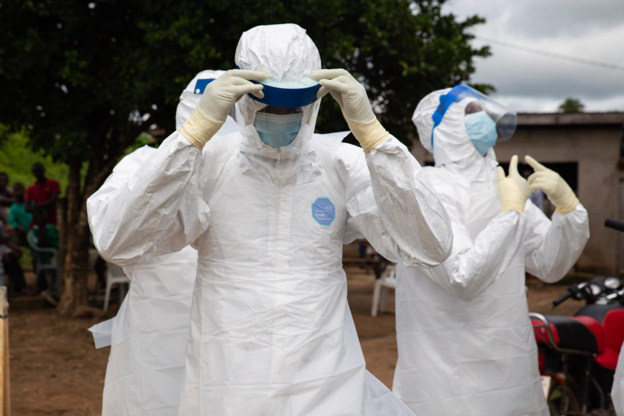 |
Healthcare workers don personal protective equipment during an Ebola response; Pandemic & Global Health. Credit: WHO Africa. |
CEPI fast-tracked three candidate vaccines against Bundibugyo ebolavirus under its emergency response framework [2]
Three vaccine candidates were named for acceleration: an rVSV-based candidate from IAVI, Moderna’s mRNA-based candidate, and a ChAdOx1-vectored candidate from the University of Oxford, to be manufactured at the Serum Institute of India. The decision reflects the absence of any licensed vaccine against Bundibugyo virus and the urgent need to establish a clinical-stage candidate that could be deployed under emergency use authorization during the ongoing outbreak. CEPI stated that the 100 Days Mission framework would guide its acceleration approach, with the aim of generating safety and immunogenicity data as rapidly as possible.
Africa CDC and WHO coordinated a continental strategy to contain the Bundibugyo ebolavirus outbreak [3]
The joint continental response plan coordinates surveillance, response capacity, and preparedness activities across African Union member states. The plan establishes a shared command structure and draws on the regional infrastructure developed during prior Ebola responses. The announcement underscored the importance of the Africa CDC as a permanent institutional player in outbreak response, built on regional capacity investments made since the 2014–2016 West Africa Ebola epidemic.
A 21-country coalition launched a coordinated program to accelerate Andes hantavirus vaccine and treatment development [4]
WHO announced that 21 countries had launched a coordinated research initiative to accelerate vaccine and treatment development for Andes hantavirus, the causative agent of hantavirus pulmonary syndrome, following the outbreak that garnered international attention earlier in 2026. The initiative will coordinate epidemiological surveillance, biospecimen sharing, and clinical trial infrastructure across endemic and non-endemic countries. Andes virus, unlike other hantavirus strains, can be transmitted person-to-person, a feature that makes pandemic risk assessment particularly important. The initiative builds on existing work by Phylex BioSciences and others who have demonstrated the feasibility of rapid mRNA vaccine design for this pathogen.
CLINICAL TRIALS |
Interim Phase 1 data for LASSARAB, a dual Lassa fever and rabies vaccine, demonstrated safety and immunogenicity against both pathogens [5]
Thomas Jefferson University and University of Maryland School of Medicine researchers reported interim results from the first human clinical trial of LASSARAB, an inactivated rabies virus-vectored vaccine expressing Lassa virus glycoprotein, designed to confer protection against both Lassa fever and rabies in a single formulation. Published in Nature Medicine, the interim analysis at Day 61 enrolled 54 healthy adults aged 18–50 years across four groups receiving escalating doses of LASSARAB or a licensed rabies control vaccine. The vaccine was safe and well tolerated, with no serious adverse events, and induced robust antibody responses against both the rabies virus and Lassa virus glycoprotein. Lassa fever, a hemorrhagic illness caused by Lassa virus, causes an estimated 300,000–500,000 infections annually in West Africa, with no licensed vaccine currently available. Longer-term follow-up and studies in endemic populations will be needed to establish durability of protection.
Moderna’s mRNA seasonal influenza vaccine MFLUSIVA (mRNA-1010) is scheduled for review by a US FDA advisory committee [6]
An advisory committee convened by the US FDA will review MFLUSIVA (mRNA-1010). The announcement follows the publication of pivotal Phase 3 efficacy and safety data in the New England Journal of Medicine in May 2026. The advisory committee meeting represents a significant step in the US regulatory pathway for MFLUSIVA. If approved, it would be the first mRNA influenza vaccine to receive licensure in the USA, adding to the mRNA platform’s regulatory track record following the COVID-19 vaccine approvals.
Vaxcyte dosed the first participant in a Phase 1 study of VAX-A1, a conjugate vaccine candidate against Group A Streptococcus [7]
First participant dosing was completed in a Phase 1 clinical study evaluating VAX-A1, Vaxcyte’s investigational conjugate vaccine candidate for the prevention of disease caused by Group A Streptococcus in healthy adults. Group A Streptococcus causes a broad spectrum of illness ranging from streptococcal pharyngitis to invasive disease and is responsible for rheumatic heart disease, a leading cause of preventable cardiovascular morbidity in low- and middle-income countries. There are currently no licensed Group A Streptococcus vaccines. The initiation of Phase 1 testing marks a significant milestone for Vaxcyte’s streptococcal vaccine program.
A Phase 3 trial found that a booster dose of yellow fever vaccine in Gambian children aged 9 months to 5 years was safe and immunogenic [8]
A Phase 3 open-label trial published in The Lancet Infectious Diseases evaluated the safety and immunogenicity of a booster dose of yellow fever vaccine in healthy Gambian children across three age groups: 9–12 months, 12–24 months, and 2–5 years. The trial found that the booster dose was safe and induced robust neutralizing antibody responses across all age groups. The findings are relevant to policy discussions around optimal dosing schedules for yellow fever vaccination in endemic settings, particularly in the context of dose-sparing strategies and evolving WHO guidance on long-term immunity following a single dose.
THERAPEUTIC VACCINES |
An mRNA cancer vaccine targeting shared neoantigens in Lynch syndrome entered Phase 1/2 clinical testing in the UK [9]
Moderna and the University of Oxford received authorization from the Medicines and Healthcare products Regulatory Agency to begin a Phase 1/2 clinical study of an investigational mRNA cancer vaccine in individuals with Lynch syndrome, a hereditary condition that substantially increases the risk of colorectal, endometrial, ovarian, and other cancers. Lynch syndrome is caused by germline mutations in mismatch repair genes, which generate a predictable repertoire of frameshift neoantigens that are shared across patients. The vaccine is designed to target these shared neoantigens to generate T cell responses capable of eliminating pre-cancerous and early cancerous cells before they progress. The program represents a distinct approach from personalized neoantigen vaccines, using a fixed antigen set applicable to a defined patient population.
MARKET TRENDS |
Lilly committed more than $3.8 billion to vaccines through acquisitions of Curevo Vaccine, LimmaTech Biologics and Vaccine Company [10]
The acquisitions of Curevo Vaccine, LimmaTech Biologics and Vaccine Company represent a combined commitment of more than $3.8 billion. Curevo Vaccine is developing CRV-101, an investigational shingles vaccine candidate, while LimmaTech focuses on vaccine technology platforms targeting bacterial toxins and superantigens applicable to pathogens including Staphylococcus aureus, Neisseria gonorrhoeae and Chlamydia trachomatis, and Vaccine Company is developing a nanoparticle-based vaccine platform with a lead Epstein–Barr virus candidate. The acquisitions represent one of the largest single entries by a major pharmaceutical company into the vaccine space in recent years and signal a strategic pivot toward infectious disease prevention. Lilly’s move follows earlier consolidation activity in the vaccine sector and may prompt further strategic repositioning among large-cap pharmaceutical companies that have historically underweighted vaccines relative to therapeutics.
REGULATION & POLICY |
The American College of Obstetricians and Gynecologists published its own 2026 immunization guidance for pregnant patients, breaking from CDC recommendations [11]
Released as a document independent of Centers for Disease Control and Prevention (CDC) guidance, the schedule routinely recommends four vaccines during pregnancy: influenza, COVID-19, Tdap, and RSV. Additional vaccines including hepatitis A and B, meningococcal, and human papillomavirus are included as risk-based recommendations. The decision to publish an independent schedule reflects the College’s concern that recent changes to the CDC Advisory Committee on Immunization Practices framework and the broader political environment surrounding US vaccine policy have created uncertainty for clinicians and patients. The ACOG schedule aligns with previous evidence-based recommendations and signals that major professional medical organizations are willing to act independently to maintain clinical guidance standards during a period of regulatory and political disruption.
 |
A clinician consults with a pregnant patient; Regulation & Policy. Credit: CDC. |
The White House directed federal agencies to align with a study recommending narrower childhood vaccine recommendations [12]
The Executive Order, signed May 29, 2026, directed the CDC and its Advisory Committee on Immunization Practices (ACIP) to treat a December 2025 HHS scientific assessment as a guiding resource and to take steps to update the childhood and adolescent vaccine schedule accordingly. The order codified and reinforced changes already enacted through a CDC schedule revision in January 2026, which had moved vaccines for influenza, COVID-19, hepatitis A and B, RSV, rotavirus, dengue, and meningococcal disease from universal recommendations to a shared clinical decision-making model. The American Medical Association (AMA) issued a statement expressing opposition to the directive, and multiple professional medical organizations have raised concerns that the changes could reduce vaccine coverage and increase the risk of preventable childhood illness. The directive adds to a series of policy actions affecting the US vaccination landscape that have accumulated since early 2025.
MANUFACTURING INNOVATION |
Alveo Technologies received a CEPI grant to develop a platform designed to reduce RNA vaccine manufacturing time and cost [13]
The grant supports development of a manufacturing platform designed to significantly reduce the time and cost associated with RNA vaccine production. The platform aims to accelerate the transition from sequence selection to final drug product, with potential applications both in pandemic preparedness scenarios and routine vaccine manufacturing. The grant supports early-stage development and scale-up activities. Reducing manufacturing timelines and per-dose costs for RNA vaccines remains a key priority for the field, particularly as the technology expands beyond COVID-19 into influenza, oncology, and outbreak preparedness applications.
SK bioscience partnered with Colombian state manufacturer VECOL to build domestic vaccine production capacity in Latin America [14]
The agreement transfers SK bioscience’s manufacturing expertise and technology to VECOL, a Colombian state-owned veterinary and vaccine manufacturer, to advance local vaccine manufacturing capacity in Latin America. The agreement is designed to transfer SK bioscience’s manufacturing expertise and technology to VECOL, supporting Colombia’s ambition to develop sustainable domestic vaccine production. The partnership aligns with broader regional and international efforts to build vaccine manufacturing infrastructure in low- and middle-income countries, reducing dependency on a small number of high-income country producers and strengthening supply security during outbreaks and routine immunization programs.
FORMULATION & DELIVERY |
Stablepharma and AFT Pharmaceuticals signed a Letter of Intent to distribute SPVX02, a fridge-free tetanus-diphtheria vaccine candidate, across major markets [15]
Under the agreement, AFT would distribute SPVX02, Stablepharma’s thermostable fridge-free tetanus-diphtheria vaccine candidate, across the United Kingdom, Canada, Australia, and New Zealand, with an option to extend into Singapore and Hong Kong. The announcement follows Phase 1 clinical data showing SPVX02 was safe and well tolerated, with immunogenicity similar to the originator refrigerated vaccine at Day 28, and stability data demonstrating maintenance of potency at 30°C for 24 months. The agreement advances SPVX02 toward pivotal Phase 2b clinical trials. Building on previous UK Health Security Agency (UKHSA) evaluation and Innovate UK funding, the distribution agreement marks a significant commercial step for the thermostable vaccine platform.
 |
Vaccine vials stored under refrigeration; Formulation & Delivery. Credit: Unsplash. |
DISCOVERY & IMMUNOLOGY |
Researchers at UT Southwestern Medical Center solved the structure of the major outer membrane protein of Chlamydia trachomatis, providing a foundation for vaccine antigen design [16]
Scientists at UT Southwestern Medical Center and collaborating US institutions published the cryo-electron microscopy structure of the major outer membrane protein (MOMP) trimer of a bacterial model for Chlamydia trachomatis in Nature Communications. MOMP is a key surface-exposed protein that has long been considered the most promising target for a chlamydia vaccine; however, prior attempts to develop a vaccine have been hampered by limited structural understanding of the protein. The resolved structure reveals the architecture of the antigenic cap, which is exposed on the bacterial surface and represents the likely host cell interaction site. The findings are expected to guide structure-based design of vaccine antigens targeting the conserved and variable regions of MOMP across the multiple chlamydial serovars responsible for urogenital infection, blindness, and lymphatic disease.
MIT researchers developed a nanoparticle adjuvant that enables the injectable polio vaccine to induce mucosal immunity in the gastrointestinal tract [17]
Researchers at MIT and Harvard Medical School published preclinical data in Science Advances demonstrating that a nanoparticle-based adjuvant incorporating Am80, a synthetic retinoid derivative of vitamin A, can direct immune cells to the mucosal lining of the gastrointestinal tract following intramuscular injection of inactivated polio vaccine. In a rat model, the adjuvanted vaccine produced a 20-fold increase in mucosal IgA antibodies compared with the unadjuvanted injectable vaccine. The injectable inactivated polio vaccine prevents disease but does not reliably block gastrointestinal infection and viral shedding, which limits its contribution to transmission interruption. The oral polio vaccine induces strong mucosal immunity but carries a small risk of vaccine-derived poliovirus. The adjuvant approach, if translated to humans, could combine the safety profile of the injectable vaccine with the mucosal immunity needed to interrupt transmission and support eradication.

References
1. World Health Organization. Epidemic of Ebola disease caused by Bundibugyo virus in the Democratic Republic of the Congo and Uganda determined a public health emergency of international concern. May 17, 2026.
2. CEPI. CEPI fast-tracks three Bundibugyo ebolavirus vaccine candidates. June 1, 2026.
3. World Health Organization. Africa CDC and WHO launch joint continental Ebola response plan. June 5, 2026.
4. World Health Organization. Twenty-one countries launch coordinated Andes virus research initiative following hantavirus outbreak. June 13, 2026.
5. Ortiz JR, Kurup D, Kaufman AC, et al. Adjuvanted inactivated rabies virus-vectored Lassa virus vaccine in healthy adults: a phase 1 trial. Nat. Med. 2026; Epub ahead of print. https://doi.org/10.1038/s41591-026-04429-z.
6. US Food and Drug Administration. Vaccines and Related Biological Products Advisory Committee June 18, 2026 meeting announcement. May 22, 2026.
7. Vaxcyte. Vaxcyte doses first participant in phase 1 study evaluating VAX-A1 for the prevention of disease caused by Group A Streptococcus in healthy adults. June 2, 2026.
8. Pley C, Jeffires DJ, Kanteh E, et al. Yellow fever vaccination in healthy Gambian children of different ages to establish safety and immunogenicity of a booster dose: an open-label, non-randomised, single-site, phase 3 vaccine trial. Lancet Infect. Dis. 2026; Epub ahead of print.
9. Moderna. Moderna and the University of Oxford receive UK authorization to begin phase 1/2 study of investigational mRNA cancer vaccine for people with Lynch syndrome. June 9, 2026.
10. Eli Lilly. Lilly announces three acquisitions to build infectious disease portfolio. May 26, 2026.
11. American College of Obstetricians and Gynecologists. ACOG releases 2026 maternal immunization schedule. June 11, 2026.
12. The White House. Realigning United States core childhood vaccine recommendations with best practices from peer, developed countries. June 1, 2026.
13. Alveo Technologies. Alveo Technologies secures CEPI grant to transform vaccine manufacturing speed and affordability. May 26, 2026.
14. SK bioscience. SK bioscience signs vaccine technology transfer agreement with Colombia’s VECOL to advance local vaccine manufacturing in Latin America. May 27, 2026.
15. Stablepharma. Stablepharma and AFT target fridge-free vaccine distribution across major markets. June 15, 2026.
16. Guo Y, Shelby M, D’haeseleer P, et al. The distinct trimeric structure of the immunodominant chlamydial antigen major outer membrane protein. Nat. Commun. 2026; 17, 4519.
17. Eshaghi B, Wang EY, Mursalova S, et al. Am80-lipid nanoparticles serve as an enteric mucosal adjuvant following parenteral immunization with inactivated polio vaccine. Sci. Adv. 2026; 12, eaea5433.