
Industry Insights: A malaria proof point and the world’s first pertussis challenge trial: a post-pandemic vaccine landscape
Vaccine Insights 2026; 5(4), 259–265
10.18609/vac.2026.033
New evidence published this month confirmed that the RTS,S/AS01E malaria vaccine is reducing child mortality at scale in sub-Saharan Africa, providing the strongest real-world validation yet for routine rollout across the region. Elsewhere, UK real-world data showed Pfizer's maternal RSV vaccine cutting infant hospitalizations by up to 85%, well above its trial efficacy, while Moderna published pivotal Phase 3 data for its mRNA seasonal influenza vaccine. The European Commission granted the first regulatory approval for a combination influenza/COVID-19 mRNA vaccine, and the opening of a pivotal human challenge trial of a whooping cough vaccine candidate was among several developments pointing to a pipeline extending well beyond the mRNA platforms that have dominated recent years.
In this issue:
Discovery & Immunology Preclinical & Clinical Therapeutic Vaccines Manufacturing Innovation Regulatory Pandemic & Global Health
DISCOVERY & IMMUNOLOGY |
NIH scientists identified the first panel of human neutralizing antibodies against measles virus [1]
Working with B cells from vaccinated and previously infected individuals, researchers at the National Institutes of Health (NIH) isolated the first panel of human monoclonal antibodies with neutralizing activity against measles virus. The antibodies targeted conserved epitopes on the measles hemagglutinin and fusion proteins and demonstrated broad neutralization across circulating strains. The work provides a molecular foundation for passive immunization strategies and guides antigen selection for next-generation measles vaccines, with particular relevance in the context of rising global measles incidence and declining vaccination coverage across multiple regions.
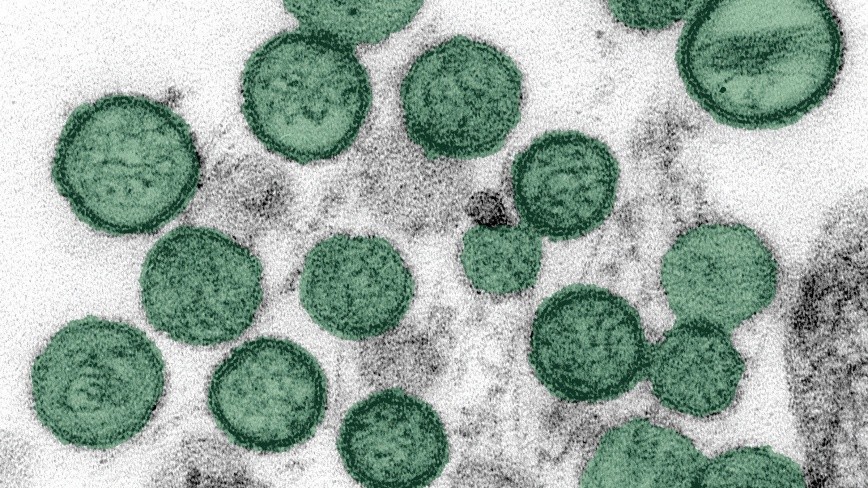 |
Colourised transmission electron micrograph of hantavirus particles; Discovery & Immunology. Credit: CDC. |
Phylex BioSciences designed an mRNA lipid nanoparticle Andes hantavirus vaccine candidate from sequence to manufacturing-ready configuration in under 48 h using an AI-driven platform [2]
Using an AI-assisted workflow integrating antigen selection with formulation design, the company reported that a candidate mRNA lipid nanoparticle vaccine against Andes hantavirus, a pathogen responsible for severe hantavirus pulmonary syndrome, was taken from sequence to a manufacturing-ready configuration in under 48 h. The platform integrates AI-driven antigen selection with an automated mRNA lipid nanoparticle formulation workflow. The announcement coincided with heightened attention to hantavirus following a reported cruise ship outbreak in May 2026. No preclinical or clinical efficacy data were presented at this stage.
A BMJ systematic review found no direct link between aluminum-adjuvanted vaccines and serious or long-term health conditions [8]
A systematic review published in the BMJ evaluated evidence on potential health effects of aluminum adjuvants used in licensed vaccines, including associations with autoimmune conditions, neurological disorders, and other long-term outcomes. Across the body of reviewed evidence, no direct causal link was established between aluminum-adjuvanted vaccines and serious or chronic health conditions. The findings are pertinent in the context of ongoing policy debate in the USA regarding vaccine ingredients, where the Advisory Committee on Immunization Practices charter was recently revised to specifically mandate review of vaccine components including aluminum.
PRECLINICAL & CLINICAL |
Moderna's mRNA seasonal influenza vaccine mRNA-1010 met its primary efficacy endpoint in a pivotal Phase 3 trial published in the New England Journal of Medicine [3]
Pivotal Phase 3 clinical safety and efficacy data for mRNA-1010, Moderna's investigational seasonal influenza vaccine, were published in the New England Journal of Medicine. The randomized trial evaluated the vaccine across two influenza seasons in adults and assessed efficacy against reverse transcription PCR-confirmed symptomatic influenza. The vaccine met its primary efficacy endpoint, with immunogenicity results demonstrating superiority against standard licensed comparators across all included influenza strains. Reactogenicity was consistent with the established profile of mRNA vaccines. The publication supports Moderna's ongoing regulatory submissions for mRNA-1010 in the USA, EU, Canada, and Australia.
UK real-world data demonstrated that maternal RSV vaccination reduced infant hospital admissions by up to 85% [4]
Findings from the first season of the UK’s national maternal respiratory syncytial virus (RSV) vaccination program, presented at the European Society of Clinical Microbiology and Infectious Diseases meeting and published by GOV.UK, showed that the program reduced RSV-attributable infant hospital admissions by up to 85%. The analysis drew on data from the first season of the program using Pfizer’s Abrysvo®. The observed effectiveness substantially exceeded the efficacy signals from the pivotal clinical trial and strongly supports maternal immunization as a strategy for protecting young infants from severe RSV disease in a real-world setting.
A population-based cohort study found nirsevimab more effective than maternal RSV vaccination in preventing infant RSV-related hospitalizations [5]
A retrospective cohort study published in The Lancet Child & Adolescent Health compared the effectiveness of neonatal nirsevimab administration versus maternal vaccination with the RSVpreF protein-based vaccine in preventing infant RSV-related hospitalizations. Nirsevimab was associated with a greater reduction in hospitalizations than maternal vaccination. The findings have direct implications for national immunization program design where both interventions are available, and highlight the value of head-to-head real-world effectiveness comparisons to inform prioritization decisions and public health policy.
A Phase 2/3 randomized controlled trial found that a dose-sparing intradermal inactivated poliovirus vaccine produced non-inferior immunogenicity in Indian infants [6]
A double-blind, randomized controlled trial published in The Lancet Infectious Diseases evaluated an intradermal dose-sparing formulation of inactivated poliovirus vaccine in infants in India. The trial assessed seroconversion against all three poliovirus serotypes and found that the dose-sparing regimen produced non-inferior rates compared with the standard intramuscular formulation. The results are relevant to global polio eradication efforts, where supply constraints and cost remain significant barriers to achieving full immunization coverage in high-burden settings, and may support broader adoption of fractional-dose strategies.
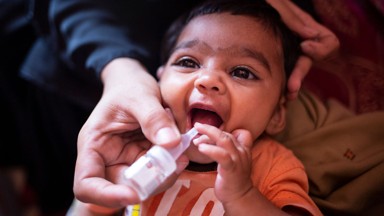 |
Oral polio vaccine administered to an infant; Preclinical & Clinical. Credit: CDC. |
A randomized trial found a numerically lower gonorrhoea incidence with meningococcal B vaccination [9]
A randomized clinical trial (MenGO) published in NPJ Vaccines assessed the efficacy of meningococcal group B vaccination against Neisseria gonorrhoeae infection, exploiting the genomic similarity between Neisseria meningitidis and N gonorrhoeae. The trial found that meningococcal B vaccination was associated with a numerically lower incidence of gonorrhoea compared with placebo, though this did not reach statistical significance (incidence rate ratio 0.78, 95% CI 0.40–1.51; p = 0.457). The findings strengthen the case for repurposing licensed meningococcal vaccines as a partial preventive strategy against gonorrhea, for which no dedicated vaccine is currently available, and support further evaluation in larger populations.
hVIVO initiated the first pivotal Phase 3 human challenge trial of a whooping cough vaccine candidate, BPZE1 [7]
On behalf of ILiAD Biotechnologies, hVIVO began the world’s first pivotal Phase 3 human challenge trial of BPZE1, a live attenuated intranasal pertussis vaccine candidate. Human challenge trials deliberately expose healthy volunteers to a pathogen under controlled conditions to accelerate efficacy assessment. BPZE1 is a live attenuated intranasal vaccine candidate designed to induce mucosal immunity against Bordetella pertussis. Pertussis, or whooping cough, remains a significant cause of infant mortality globally, and currently available vaccines provide incomplete and waning protection, creating a recognized unmet need for improved candidates.
THERAPEUTIC VACCINES |
Phase 2 data for the neoantigen cancer vaccine IO102-IO103 combined with pembrolizumab demonstrated durable responses in previously untreated metastatic melanoma [10]
Published in Annals of Oncology, the trial reported clinical outcomes for IO102-IO103, a T cell-activating cancer vaccine targeting indoleamine 2,3-dioxygenase 1 and programmed death-ligand 1, in combination with the checkpoint inhibitor pembrolizumab in patients with previously untreated metastatic melanoma. The combination demonstrated durable objective responses and a manageable safety profile. The results add to the growing evidence base for immune-modulatory cancer vaccines as combination partners for checkpoint inhibition and provide a rationale for further clinical investigation.
Phase 1/2 data for personalized mRNA neoantigen vaccine EVM16 showed early clinical activity in gastrointestinal and thoracic cancers at AACR 2026 [11]
Everest Medicines announced positive first-in-human data for EVM16, its personalized mRNA neoantigen cancer vaccine, presented at the American Association for Cancer Research (AACR) Annual Meeting 2026. The Phase 1/2 study evaluated EVM16 in combination with the anti-programmed death-1 antibody tislelizumab in patients with gastric, gastroesophageal junction, esophageal, and non-small cell lung cancers. Preliminary data indicated acceptable safety and evidence of antigen-specific T cell responses, supporting further dose and schedule optimization.
Evaxion\u2019s AI-Immunology platform correctly predicted immunogenic neoantigens in 86% of cases in a Phase 2 personalized cancer vaccine study in melanoma [12]
Evaxion reported data presented at the AACR Annual Meeting 2026 showing that its AI-Immunology platform identified vaccine targets with 86% precision, defined as the proportion of AI-predicted neoantigens confirmed immunogenic by T cell assay, in patients enrolled in a Phase 2 trial of personalized cancer vaccine EVX-01 in combination with pembrolizumab in melanoma. The company cited the results as evidence of the platform's translational utility in personalized vaccine design, with further clinical evaluation ongoing.
MANUFACTURING INNOVATION |
BioNTech announced the closure of three manufacturing facilities with an impact on approximately 1,860 positions [13]
Three manufacturing facilities are to close as part of a strategic restructuring of BioNTech's global manufacturing footprint, with approximately 1,860 positions expected to be affected. The decision reflects the substantial contraction in COVID-19 vaccine demand following the acute COVID-19 pandemic phase and was accompanied by a restatement of the company's longer-term manufacturing strategy as it advances its multi-product clinical pipeline. The closures represent a significant reduction in global mRNA vaccine manufacturing capacity and raise questions about supply chain resilience should rapid production scale-up be required in a future public health emergency.
CEPI awarded seed funding to Analysis Zero to advance nuclear magnetic resonance spectroscopy as a real-time batch characterization tool for RNA vaccine manufacture [14]
Analysis Zero, a spin-out from Recipharm, received seed funding from CEPI to develop a nuclear magnetic resonance spectroscopy-based platform for real-time quality testing of RNA vaccine batches during manufacture. The technology is designed to enable rapid, non-destructive characterization of RNA integrity and product quality, with potential applications in in-process monitoring and batch release. If validated at manufacturing scale, the approach could meaningfully reduce release timelines and contribute to cost reduction across mRNA vaccine programs.
REGULATORY |
The European Commission granted marketing authorization for Moderna's mCombriax, the worlds first approved combination mRNA influenza and COVID-19 vaccine [15]
mCombriax® (mRNA-1073), Moderna's combination mRNA vaccine targeting seasonal influenza and COVID-19, received formal marketing authorization from the European Commission for use in adults aged 50 years and older. The authorization followed a positive Committee for Medicinal Products for Human Use recommendation issued in February 2026 and makes mCombriax the first combination influenza/COVID-19 vaccine to receive regulatory approval anywhere in the world. Moderna's application for an equivalent product in the USA continues to face a more complex regulatory pathway under the current administration.
 |
A healthcare worker prepares a vaccine dose for administration; Regulatory. Credit: iStock. |
The European Commission announced a new Global Health Resilience Initiative to bolster international preparedness infrastructure against future pandemic threats [16]
A new Global Health Resilience Initiative was announced by the European Commission to enhance preparedness and response capacity against emerging health threats. The initiative encompasses commitments to strengthen disease surveillance infrastructure, support vaccine R&D for priority pathogens, and increase regional biomanufacturing capacity. It represents a significant EU policy commitment in the context of ongoing concerns about preparedness gaps exposed by the COVID-19 pandemic and the evolving global health security landscape.
The EMA convened a new expert group to address declining vaccine confidence across EU member states [17]
The EMA announced the establishment of a new advisory group dedicated to vaccine confidence, designed to support the agency and its member states in addressing vaccine hesitancy and misinformation across the EU. The group will draw on expertise from healthcare professionals, patient organizations, and communication specialists. The initiative reflects growing recognition among regulatory bodies that sustaining public confidence in vaccines requires proactive engagement strategies alongside scientific assessment, particularly in the context of recent disruptions to established vaccine recommendation frameworks in other jurisdictions.
A new acting director took over at the US FDA's Center for Biologics Evaluation and Research following Vinay Prasad's departure [18]
Following the departure of Vinay Prasad as director of the US FDA Center for Biologics Evaluation and Research at the end of April 2026, Prasad's deputy assumed the role of acting director. The Center for Biologics Evaluation and Research is responsible for the regulatory oversight of vaccines, blood products, and cell and gene therapies in the USA. Prasad's tenure was marked by controversy over the regulatory handling of several vaccine and gene therapy applications. The identity and tenure of the acting director, and the timeline for appointment of a permanent replacement, remained unclear at the time of publication.
WHO member states agreed to extend negotiations on the Pathogen Access and Benefit Sharing annex to the Pandemic Agreement ahead of the World Health Assembly [19]
WHO member states agreed to a further extension of negotiations on the Pathogen Access and Benefit Sharing annex to the WHO Pandemic Agreement, with discussions continuing ahead of consideration by the World Health Assembly. The Pathogen Access and Benefit Sharing annex is designed to ensure rapid sharing of pathogens with pandemic potential alongside equitable distribution of resulting benefits, including vaccines, diagnostics, and therapeutics. Outstanding issues include the definition of benefit-sharing obligations, contractual arrangements underpinning the system, and governance mechanisms. The extension reflects the complexity of reaching consensus on a framework that balances national sovereignty over biological materials with global health security imperatives.
PANDEMIC & GLOBAL HEALTH |
Moderna initiated a Phase 3 clinical study of mRNA-1018, its mRNA H5 avian influenza vaccine candidate [22]
Moderna announced the initiation of a Phase 3 clinical study of mRNA-1018, its investigational mRNA pandemic influenza vaccine targeting H5 avian influenza strains, following earlier-stage safety and immunogenicity data in healthy adults. The trial is being supported by CEPI. Under the terms of the agreement, Moderna has committed to allocating a proportion of production capacity to low- and middle-income countries at affordable pricing in the event of regulatory approval during a pandemic. The initiation follows a previously reported CEPI funding commitment of up to $54.3 million announced in January 2026.
WHO and Lancet evidence confirmed that the RTS,S/AS01E malaria vaccine is producing measurable reductions in child mortality in sub-Saharan Africa [20,21]
The WHO and researchers publishing in The Lancet reported evidence from the routine implementation of the RTS,S/AS01 malaria vaccine in Ghana, Kenya, and Malawi confirming measurable reductions in child mortality following program rollout. The observational evaluation of the cluster-randomized implementation program found that introducing the vaccine was associated with significant reductions in all-cause and malaria-specific mortality in children under 5 years of age. The WHO stated that the vaccine is saving children's lives and cited the evidence in support of accelerated scale-up across sub-Saharan Africa, where malaria remains a leading cause of childhood death.
“ | The vaccine is saving children's lives — WHO cited the evidence in support of accelerated scale-up across sub-Saharan Africa, where malaria remains a leading cause of childhood death. |
Fiocruz received WHO and PAHO designation as a hub for biomanufacturing workforce training across Latin America and the Caribbean [23]
The Pan American Health Organization (PAHO) and WHO designated Brazil's Oswaldo Cruz Foundation (Fiocruz) as a regional biomanufacturing training center as part of efforts to expand WHO's global biomanufacturing workforce network. The designation supports training of manufacturing personnel across Latin America and the Caribbean, contributing to equitable access to vaccines and biologics and reducing regional dependency on a small number of high-income country producers. The announcement aligns with WHO's broader strategy of developing regional hubs to build sustainable local manufacturing capacity in low- and middle-income countries.
Aspen Pharmacare and Africa CDC formalized plans to strengthen sustainable vaccine supply across the continent [24]
A long-term vaccine supply partnership between Aspen Pharmacare and the Africa Centers for Disease Control and Prevention was advanced, aimed at strengthening sustainable vaccine access across the continent. The agreement builds on Aspen's existing production capabilities and represents a continuation of efforts to improve African vaccine manufacturing and supply security. Specific vaccine targets and supply volumes covered by the partnership were not disclosed in the announcement.
PAHO and CSL Seqirus signed a long-term agreement to reserve pandemic influenza vaccine supply for Latin America and the Caribbean [25]
Under a new long-term agreement between PAHO and CSL Seqirus, pandemic influenza vaccine supply will be reserved for countries in Latin America and the Caribbean in the event of a new outbreak. The arrangement is intended to address longstanding inequities in global vaccine supply during public health emergencies, where high-income countries have historically secured the majority of available doses. The agreement complements existing PAHO mechanisms for regional vaccine access and reflects broader regional pandemic preparedness priorities.

References
1. Researchers identify first suite of human antibodies against measles virus. May 14, 2026. https://www.nih.gov.
2. Phylex BioSciences. Phylex BioSciences demonstrates power of AI-derived mRNA nanoparticle vaccine technology by designing ready-to-manufacture Andes hantavirus vaccine in two days. May 13, 2026. https://www.prnewswire.com.
3. Moderna. Moderna announces New England Journal of Medicine publication of pivotal Phase 3 clinical safety and efficacy data for its investigational seasonal influenza vaccine, mRNA-1010. May 7, 2026. https://www.accesswire.com.
4. GOV.UK. RSV maternal vaccine cuts baby hospital admissions by up to 85%. Apr 19, 2026. https://www.gov.uk.
5. Valtuille Z, Fafi I, Kaguelidou F, et al. Effectiveness of nirsevimab immunization after birth versus RSVpreF maternal vaccination in preventing RSV-related hospitalizations in infants: a population-based retrospective cohort study. Lancet Child Adolesc. Health 2026; Epub ahead of print. https://doi.org/10.1016/S2352-4642(26)00075-1.
6. Kulkarni PS, Desai SA, Kanungo S, et al. Immunogenicity and safety of a dose-sparing inactivated poliovirus vaccine in infants in India: a Phase 2/3, double-blind, randomized controlled trial. Lancet Infect. Dis. 2026; Epub ahead of print. http://doi.org/10.1016/S1473-3099(26)00108-8.
7. hVIVO. hVIVO to conduct world's first pivotal Phase 3 human challenge whooping cough vaccine trial for ILiAD Biotechnologies. Apr 23, 2026. https://www.londonstockexchange.com.
8. Doyon-Plourde P, Chong J, Abrams EM, et al. Aluminum adjuvants in vaccines and potential health effects: systematic review. BMJ 2026; 393.
9. Thng C, Eskandari S, Jin F, et al. Efficacy of the meningococcal vaccine against Neisseria gonorrhoeae: a randomised clinical trial (MenGO). NPJ Vaccines 2026; 2304.
10. Hassel JC, Arance A, Carlino MS, et al. IO102-IO103 immune-modulatory cancer vaccine and pembrolizumab in melanoma. Ann. Oncol. 2026; Epub ahead of print. https://doi.org/10.1016/S0923-7534(26)00151-1.
11. Everest Medicines. Everest Medicines announces positive first-in-human data for personalized mRNA cancer vaccine EVM16 at AACR 2026. Apr 22, 2026. https://www.acnnewswire.com.
12. Evaxion. Evaxion's AI-Immunology platform demonstrates 86% vaccine target precision in Phase 2 personalized cancer vaccine trial. Apr 17, 2026. https://www.globenewswire.com.
13. BioNTech. BioNTech closing three manufacturing sites, hitting 1860 jobs. May 5, 2026. https://www.biontech.com.
14. CEPI. CEPI awards seed funding to Analysis Zero to advance real-time RNA vaccine quality testing using NMR technology. Apr 16, 2026. https://cepi.net.
15. Moderna. Moderna receives European Commission marketing authorization for mCOMBRIAX, Moderna's mRNA combination vaccine against influenza and COVID-19. Apr 21, 2026. https://www.accesswire.com.
16. European Commission. EU Commission launches Global Health Resilience Initiative to strengthen preparedness against future health threats. May 14, 2026. https://ec.europa.eu.
17. European Medicines Agency. EMA launches new advisory group on vaccine confidence. Apr 29, 2026. https://www.ema.europa.eu.
18. Reuters. Acting CBER director appointment. May 1, 2026. https://www.reuters.com/legal/litigation/us-fda-taps-szarama-acting-head-vaccine-unit-politico-reports-2026-05-01.
19. World Health Organization. WHO member states agree to extend negotiations on key annex to the pandemic agreement. May 3, 2026. https://www.who.int.
20. World Health Organization. Malaria vaccine is saving children's lives: WHO. May 9, 2026. https://www.who.int; see also: World Health Organization. New evidence confirms malaria vaccine saves child lives and will have high impact in wider rollout. May 8, 2026. https://www.who.int.
21. Mwapasa V, Asante KP, Milligan P, et al. Impact of introducing RTS,S/AS01E malaria vaccine on mortality in young children in Ghana, Kenya, and Malawi: an observational evaluation of a cluster-randomized implementation program. Lancet 2026; 10541, 1796–1808.
22. Moderna. Moderna announces initiation of Phase 3 study of investigational mRNA pandemic influenza vaccine candidate. Apr 22, 2026. https://www.accesswire.com.
23. PAHO. PAHO and WHO designate Brazil's Fiocruz as regional biomanufacturing training center. May 14, 2026. https://www.paho.org.
24. Aspen Pharmacare. Aspen and Africa CDC advance long-term vaccine supply partnership for Africa. May 13, 2026. https://www.aspenpharmacare.com.
25. CSL Seqirus. CSL Seqirus signs long-term agreement with the Pan American Health Organization (PAHO) to advance pandemic influenza preparedness in Latin America and the Caribbean. May 13, 2026. https://www.csl.com.