
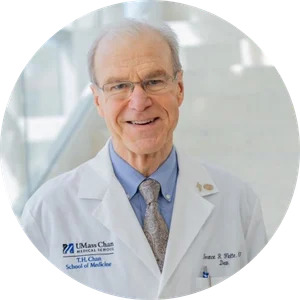
Abi Pinchbeck, Editor, Cell & Gene Therapy Insights, speaks with Terence Flotte, Elisabeth Chair for the Dean of Medicine and Executive Deputy Chancellor of UMass Chan Medical School, past President of the American Society of Gene and Cell Therapy, about the origins of AAV-based gene therapy, the evolution of the field over three decades, the remaining safety and dose challenges, expanding beyond rare disease, and emerging initiatives to improve global patient access.
Could you tell us about the origins of the first use of AAV as a delivery vehicle in 1995 – what was the scientific rationale, and what did that first-in-human trial teach you?
TFMy background is as a clinician – a pediatrician and pediatric pulmonary physician. During my training, I received funding from the Cystic Fibrosis Foundation, which enabled me to spend 3 years at the National Institutes of Health. I joined the lab of Barrie Carter in 1989.
Two things came together at that moment. First, the AAV system as a vector was in early stages of development. It had only been used by two labs, one of which was the Carter lab and the other was the lab of Nick Muzyczka, where Jude Samulski worked. Second, the discovery of the CFTR gene was imminent; it was published about a month and a half after I joined the lab. The Cystic Fibrosis Foundation had already looked ahead and said that once the gene was found, we should pursue gene therapy.
During my time working in Barrie’s lab, we were able to correct cystic fibrosis lung cells in culture. He left in 1992 to go to Targeted Genetics, now AmpliPhi Biosciences, as their founding CSO. I returned to Hopkins, set up my own lab, and began taking this work in vivo into the lungs, first in rabbits and then in extended safety testing in non-human primates. By 1994, I was ready to start a clinical trial, and we were treating the first patient in November of 1995.
What we learned was fascinating. At that time, the general dogma was that AAV would integrate into the host cell chromosome. In tissue culture, the wild-type virus integrates into the AAVS1 site, what everyone now uses as the genomic safe harbor for CRISPR. It turned out the vector was not integrating in these cells; it was primarily episomal. We showed that both in cell culture in a 1994 paper and in non-human primates in 1996. Because of that episomal nature, the effect was transient.
We also demonstrated, over a large dose range across several extensions of that trial, that at doses equivalent to those used with adenovirus, AAV was considerably less pro-inflammatory and less immunogenic in terms of innate immune activation. We gathered a substantial amount of general safety information, including vector shedding data from urine and respiratory samples. The finding that the vector was primarily episomal ultimately directed the field toward thinking that AAV might be better suited for terminally differentiated, non-dividing cells. That insight was directly linked to two of the biggest subsequent breakthroughs: Luxturna® in the retina, a small space populated by terminally differentiated cells, and the more recent correction of otoferlin-related genetic deafness.