
Industry Insights: Antisense oligonucleotide progress in chronic hepatitis B and new approaches to RNA editing and delivery
Nucleic Acid Insights 2026; 3(9), 655–658
DOI: 10.18609/nai.2026.086
Mid-October to mid-November 2026 saw regulatory, clinical, and preclinical progress across antisense, RNA-editing, and conjugated oligonucleotide modalities, with chronic hepatitis B a particular focus. GSK received Health Canada approval of bepirovirsen as a finite therapy for functional cure of chronic hepatitis B, and CAMP4 Therapeutics secured Clinical Trial Application approval in the European Union for CMP-002 in SYNGAP1-related disorder. AusperBio reported functional cure sustained to 15 months off all treatment with AHB-137, and Roche reported a 43.1% reduction in proteinuria with sefaxersen in IgA nephropathy. Preclinical highlights spanned Korro Bio’s RNA-editing oligonucleotide for alpha-1 antitrypsin deficiency, Ractigen Therapeutics’ lipid-conjugated platform for extrahepatic delivery, and a Stanford method for spatially controlled gene editing. Market activity included the launch of Emvena Therapeutics and a $1.9 billion impairment charge at Novartis following the Phase 3 failure of del-desiran. In this issue: Regulatory changes and updatesClinical trials and researchResearch and development highlightsMarket trends |
REGULATORY CHANGES AND UPDATES |
GSK announced Health Canada approval of antisense oligonucleotide bepirovirsen for functional cure of chronic hepatitis B [1]
GSK announced that Health Canada approved Hibsago (bepirovirsen), an antisense oligonucleotide (ASO), as a finite treatment to achieve functional cure of chronic hepatitis B (CHB) in non-cirrhotic adults who have received nucleos(t)ide analogue therapy for at least 6 months, with HBV DNA <90 IU/mL and hepatitis B surface antigen (HBsAg) ≤3,000 IU/mL. Bepirovirsen targets HBV RNA to reduce viral protein and HBsAg production and stimulate immune control. Approval, granted under Health Canada’s Priority Review policy, was supported by the Phase 3 B-Well trials, in which functional cure rates were 19% at baseline HBsAg ≤3,000 IU/mL and 26% at ≤1,000 IU/mL, versus 0% with placebo. It follows authorizations in Japan and the USA.

GSK announced Health Canada approval of antisense oligonucleotide bepirovirsen for functional cure of chronic hepatitis B; Regulatory changes and updates. Credit: Adobe Stock.
CAMP4 Therapeutics received Clinical Trial Application approval to run its Phase 1/2 trial of an ASO for SYNGAP1-related disorder in the EU [2]
CAMP4 Therapeutics announced Clinical Trial Application approval from regulatory authorities and ethics committees in multiple EU countries to initiate its global Phase 1/2 ASCEND trial of CMP-002 at European Union sites. CMP-002 is an intrathecally administered ASO designed to bind a SYNGAP1-specific regulatory RNA to increase SYNGAP1 expression and restore SYNGAP protein toward near wild-type levels in SYNGAP1-related disorder, a haploinsufficient CNS disorder affecting over 10,000 individuals in the US with no approved disease-modifying therapies. Preclinically, CMP-002 increased SYNGAP protein in patient-derived neurons and showed broad brain distribution in non-human primates. The approval follows clearances in Australia, Argentina, and the UK. First patient dosing is anticipated in Q4 2026.
CLINICAL TRIALS AND RESEARCH |
AusperBio reported sustained functional cure at 15 months off all treatment with an ASO in chronic hepatitis B [3]
AusperBio reported long-term follow-up data from Study AB-10-8004 (NCT07146100) assessing durability of functional cure with AHB-137, an investigational unconjugated ASO for CHB that targets HBV RNAs to suppress hepatitis B surface antigen production and inhibit viral replication. The study followed participants achieving complete or partial response in Phase 2 parent studies, enrolling 34 nucleos(t)ide analogue (NA)-treated and 11 treatment-naïve participants. Among NA-treated participants, functional cure was maintained in 16 of 17 evaluable participants at 12 months and nine of nine at 15 months after NA discontinuation, with no re-initiation required. Six of seven treatment-naïve complete responders maintained functional cure through 15 months. No new safety signals were observed.

AusperBio reported sustained functional cure at 15 months off all treatment with an ASO in chronic hepatitis B; Clinical trials and research. Credit: Adobe Stock.
Roche reported interim Phase 3 data showing an ASO reduced proteinuria in IgA nephropathy [4]
Roche reported interim data from the ongoing Phase 3 IMAgINATION study (NCT05797610) of sefaxersen in adults with primary IgA nephropathy (IgAN) at high risk of progression receiving optimized standard of care. Sefaxersen is a liver-directed ASO inhibitor of complement factor B production, administered as a once-monthly subcutaneous injection intended for self-administration. The study randomized 459 participants 1:1 to sefaxersen or placebo for 105 weeks. At 37 weeks, sefaxersen achieved a 43.1% reduction in proteinuria versus placebo, measured by 24-h urine protein-to-creatinine ratio (95% CI 32.5–52.0; p<0.0001), with consistent effects across pre-specified subgroups and no new safety signals. The study continues blinded, with estimated glomerular filtration rate assessed at week 105.
RESEARCH AND DEVELOPMENT HIGHLIGHTS |
Korro Bio reported preclinical data for an RNA-editing oligonucleotide targeting both liver and lung manifestations of alpha-1 antitrypsin deficiency [5]
Korro Bio reported preclinical results for KRRO-111, a subcutaneously administered GalNAc-conjugated RNA-editing oligonucleotide for alpha-1 antitrypsin deficiency (AATD). Built on Korro’s OPERA platform, KRRO-111 recruits endogenous adenosine deaminase acting on RNA enzymes to correct the pathogenic SERPINA1 transcript, restoring functional M-AAT while reducing mutant Z-AAT synthesis. Editing activity reached up to 98% in mouse and human hepatocytes (EC50 ~1 nM). In single-dose C57BL/6-PiZ mice, editing reached 91%, with responses detectable through at least day 42. In repeat-dose NSG-PiZ mice, editing reached 96% and total AAT reached 172 μM at day 57, approximately 6-fold above vehicle. Whole liver Z-AAT fell by 95% in immunocompetent mice. Regulatory submission is expected in H1 2027.
Ractigen Therapeutics published preclinical data on a lipid-conjugated oligonucleotide platform for delivery beyond the liver [6]
Ractigen Therapeutics announced publication in Molecular Therapy – Nucleic Acids of a study describing its LiCO™ (Lipid-Conjugated Oligonucleotide) extrahepatic delivery platform, which pairs an optimized lipid moiety with a benzimidazole-based linker at the 5´ end of the passenger strand and is compatible with both small interfering RNA and small activating RNA payloads. In mice, a single systemic dose produced >90% target mRNA knockdown in skeletal muscle, heart, aorta, and adipose tissue, with ≥50% silencing persisting at least 6 months. Studies in Cd36-knockout models identified CD36 as the primary uptake receptor. In cynomolgus macaques, two intravenous doses of LiCO-siMSTN produced approximately 90% myostatin knockdown and 60–70% protein suppression through day 98.
Stanford researchers reported a noninvasive method for controlling where gene editing occurs using ultrasound and light [7]
Researchers at Stanford University’s Wu Tsai Neurosciences Institute reported a method for spatially controlled gene editing that avoids surgery or implants, published in Cell. The approach combines circulating nanoparticles that emit light when struck by focused ultrasound with a light-activated CRISPR editor. To overcome the size constraints of viral delivery, the team developed a smaller light-sensitive Cas12f editor engineered to respond more efficiently to light, and increased nanoparticle brightness to reduce the ultrasound power required. In a reporter mouse model, directing ultrasound at one hemisphere produced editing on that side only, while the other remained unedited. The authors note potential applications in localized gene silencing, including for neuropathic pain.
MARKET TRENDS |
The Penn-BioNTech Innovative Therapeutics Seed Fund launched Emvena Therapeutics to develop placenta-targeted mRNA medicines [8]
The Penn-BioNTech Innovative Therapeutics Seed Fund announced its first investment, launching and financing Emvena Therapeutics, a company developing mRNA medicines delivered to the placenta for maternal and fetal conditions. The $50 million fund, formed by the University of Pennsylvania, BioNTech, and Osage University Partners, invests in early-stage companies based on Penn intellectual property. Emvena is advancing technology from the laboratory of Michael Mitchell at the University of Pennsylvania, where a lipid nanoparticle was shown to preferentially deliver mRNA to the placenta relative to conventional formulations, and mRNA encoding vascular endothelial growth factor reduced disease severity in mouse models of preeclampsia. Proceeds will support investigational new drug-enabling studies for the lead preeclampsia program.
Novartis reported a $1.9 billion impairment charge following the Phase 3 failure of an antibody–oligonucleotide conjugate in myotonic dystrophy type 1 [9]
Novartis reported that the failure of delpacibart etedesiran (del-desiran) in the pivotal Phase 3 HARBOR study in myotonic dystrophy type 1 resulted in a $1.9 billion impairment charge in the third quarter, contributing to a 70% fall in net income to $1.2 billion. Quarterly sales grew 4% to $14.5 billion. Del-desiran is one of three antibody–oligonucleotide conjugate therapies Novartis acquired through its $12 billion purchase of Avidity Biosciences, alongside candidates in Duchenne muscular dystrophy and facioscapulohumeral muscular dystrophy. CEO Vas Narasimhan attributed the charge to the additional time and resources required to bring del-desiran to market and stated that a further Phase 3 study is assumed to be needed, with timelines not yet determined.
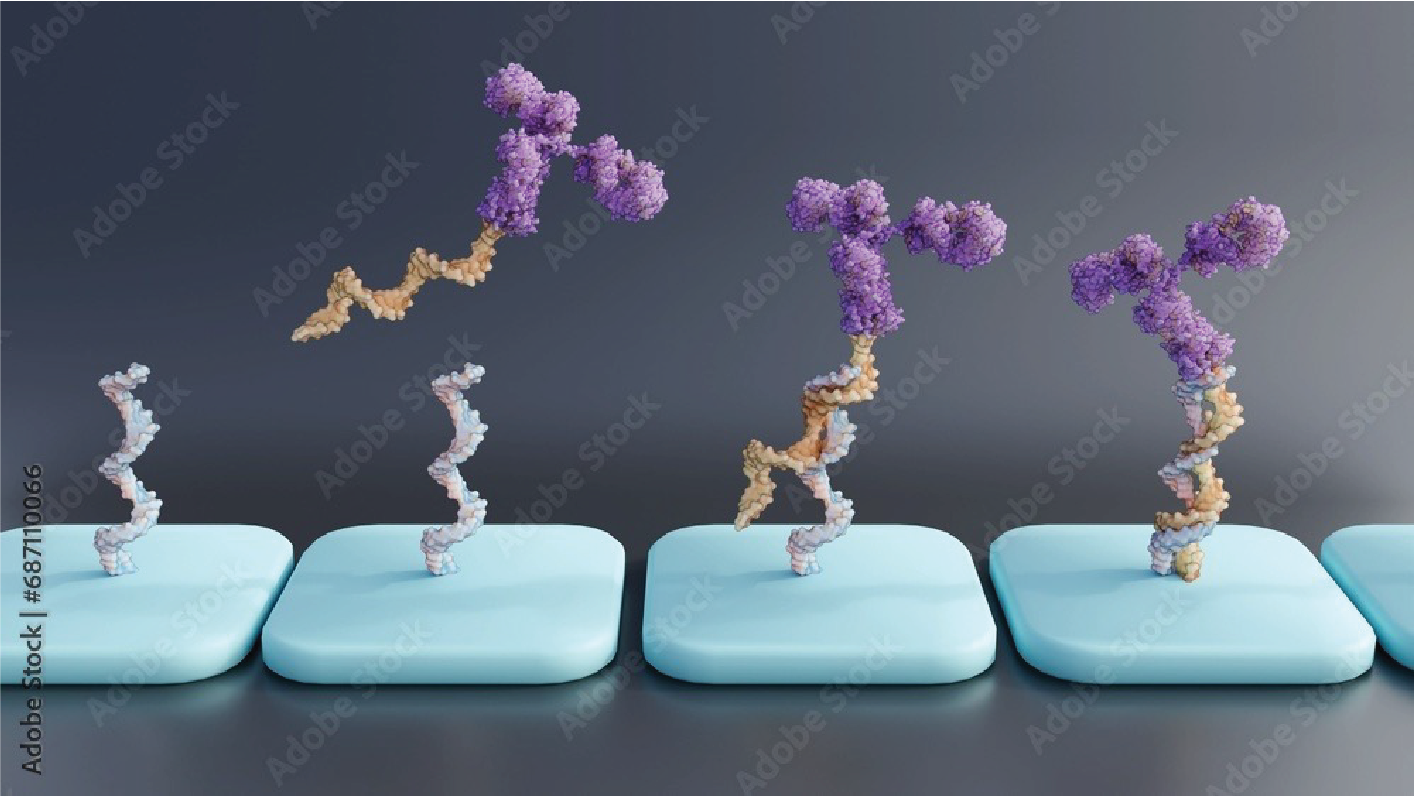
Novartis reported a $1.9 billion impairment charge following the Phase 3 failure of an antibody–oligonucleotide conjugate in myotonic dystrophy type 1; Market trends. Credit: Adobe Stock.

References
1. GSK. Hibsago (bepirovirsen) approved in Canada as the first and only finite therapy indicated to achieve functional cure of chronic hepatitis B. 2026.
2. GlobeNewswire. CAMP4 Therapeutics receives Clinical Trial Application approval for Phase 1/2 clinical trial of CMP-002 in patients with SYNGAP1-related disorder in the European Union. 2026.
3. PR Newswire. AusperBio reports sustained functional cure up to 15 months off all HBV treatment in treatment-naïve and NA-treated patients with chronic hepatitis B. 2026.
4. Roche. Roche presents interim Phase 3 data showing sefaxersen significantly reduced proteinuria in people with IgA nephropathy (IgAN). 2026.
5. Korro Bio. Korro reports best-in-class preclinical data for KRRO-111 demonstrating potential to benefit lung and liver manifestations of alpha-1 antitrypsin deficiency. 2026.
6. Ractigen Therapeutics. Ractigen Therapeutics publishes foundational study on its extrahepatic LiCO delivery platform in Molecular Therapy – Nucleic Acids. 2026.
7. Song D, Hong G, Lin M, et al. Ultrasound-controlled gene editing in the brain. Cell Sep 28, 2026.
8. Business Wire. Penn-BioNTech Innovative Therapeutics Seed Fund announces first investment. 2026.
9. Novartis. Novartis delivered sales growth and core margin expansion in Q3, raised FY core operating income guidance. 2026.