
Industry Insights: Regulatory progress and AI-driven advances in nucleic acid therapeutics
Nucleic Acid Insights 2026; 3(3), 199–203
DOI: 10.18609/nai.2026.026
Across March and April 2026, activity in the nucleic acid therapeutics field reflected broad regulatory momentum and continued clinical advancement across multiple RNA modalities. Regulatory highlights included US FDA Priority Review designations for Ionis' antisense oligonucleotide (ASO) zilganersen in Alexander disease, alongside EMA acceptance of GSK's marketing authorisation application for the ASO bepirovirsen in chronic hepatitis B. Clinical milestones featured first-in-human trials of novel modalities, including Alltrna's transfer RNA therapeutic AP003 and AIRNA's RNA-editing candidate AIR-001. AI-driven discovery also advanced, with Asimov launching an integrated RNA optimisation platform and ProQR partnering with Ginkgo Bioworks to scale high-throughput data generation for its RNA editing pipeline. In this issue: Regulatory Changes and Updates Clinical Trials and Research Tools and Technologies Collaborations, Partnerships, and Acquisition Market Trends |
REGULATORY CHANGES AND UPDATES |
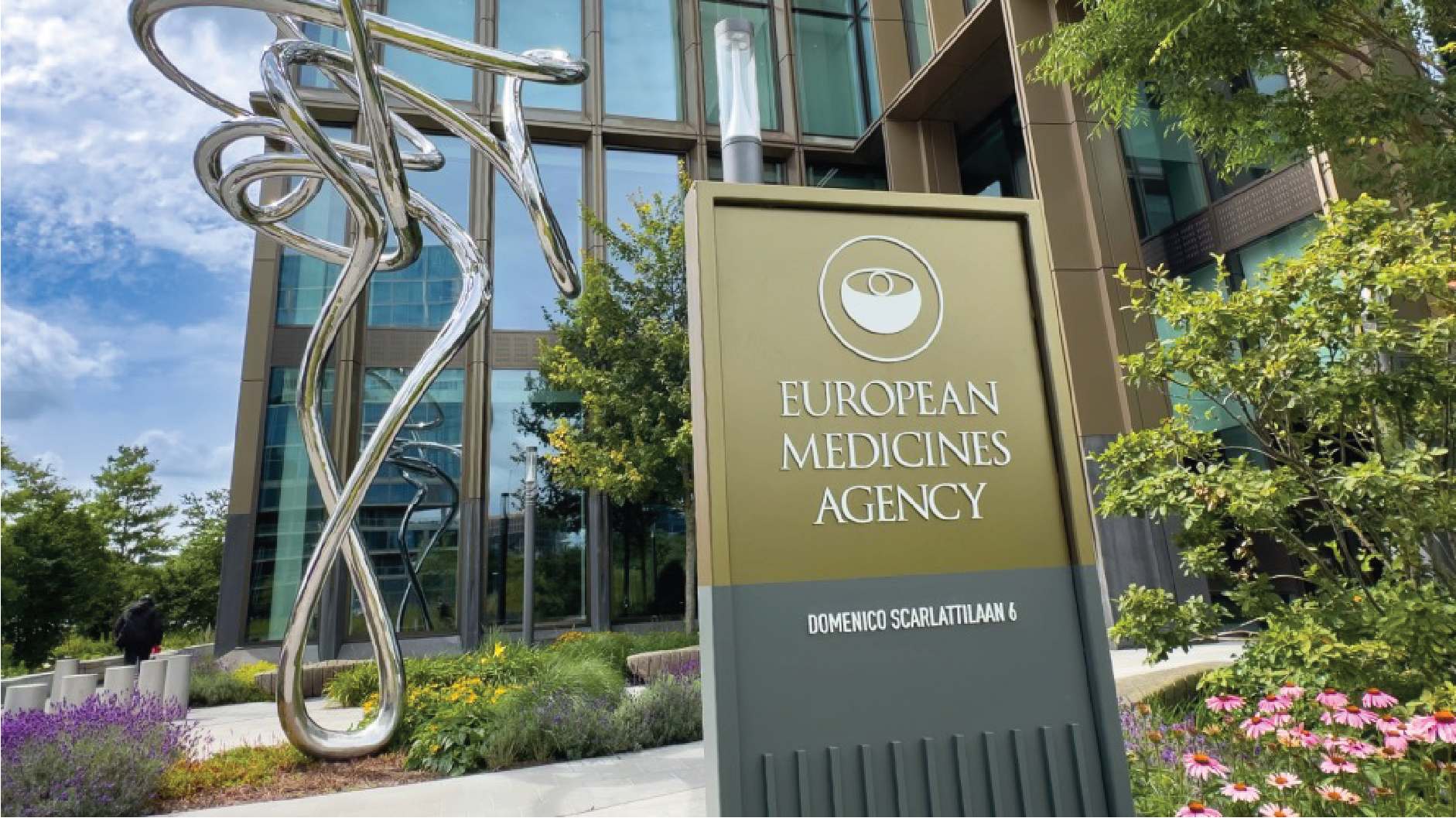 |
EMA accepted bepirovirsen marketing authorisation application for chronic hepatitis B; Regulatory Changes and Updates. Credit: EMA |
EMA accepted bepirovirsen marketing authorisation application for chronic hepatitis B [1]
GSK announced that the EMA accepted for review the marketing authorisation application for bepirovirsen, an investigational antisense oligonucleotide (ASO), for the treatment of adults with chronic hepatitis B. Bepirovirsen is designed to degrade hepatitis B virus mRNA and pregenomic RNA, suppress hepatitis B surface antigen (HBsAg), and stimulate immune response. The submission was supported by the Phase 3 B-Well 1 and B-Well 2 trials, both of which met their primary endpoint of functional cure – defined as HBsAg loss and undetectable hepatitis B virus DNA for at least 24 weeks post-treatment – at statistically significant and clinically meaningful rates versus standard of care alone. Bepirovirsen was licensed from Ionis Pharmaceuticals and is not currently approved anywhere.
Ionis received a US FDA Priority Review for zilganersen in Alexander disease [2]
Ionis Pharmaceuticals announced that the FDA accepted for Priority Review the New Drug Application (NDA) for zilganersen, an ASO designed to inhibit excess glial fibrillary acidic protein production, for the treatment of Alexander disease (AxD). The Prescription Drug User Fee Amendments target action date is September 22, 2026. The NDA was supported by a randomized, double-blind, controlled Phase 1–3 study (n=54) in which zilganersen 50 mg demonstrated statistically significant stabilization of gait speed on the 10-Meter Walk Test versus control at week 61 (least square mean difference 33.3%; p=0.0412). The FDA previously granted zilganersen Breakthrough Therapy, Orphan Drug, and Rare Pediatric Disease designations. No disease-modifying treatments for AxD are currently approved.
CLINICAL TRIALS AND RESEARCH |
Alltrna received approval to initiate first-in-human Phase 1 trial of tRNA therapeutic AP003 [3]
Alltrna announced approval to initiate a Phase 1 healthy volunteer trial of AP003 in Australia under the Therapeutic Goods Administration Clinical Trial Notification scheme. AP003 is a chemically modified, engineered transfer RNA (tRNA) oligonucleotide encapsulated in a liver-directed lipid nanoparticle (LNP), designed to read through arginine-to-TGA premature termination codons (PTCs) and restore full-length protein production. It is the first tRNA therapeutic to enter clinical trials. The single ascending dose study will evaluate safety and pharmacokinetics, with data intended to inform subsequent trials in genetically defined patient populations with Stop Codon Disease. In preclinical models, AP003 restored full-length protein expression and downstream functional activity across disease settings driven by shared PTCs.
 |
AIRNA dosed first patient in Phase 1 trial of RNA-editing therapy AIR-001 for alpha-1 antitrypsin deficiency; Clinical Trials and Research. Credit: Adobe Stock |
AIRNA dosed first patient in Phase 1 trial of RNA-editing therapy AIR-001 for alpha-1 antitrypsin deficiency [4]
AIRNA announced first patient dosing in the Phase 1 RepAIR1 trial (NCT07431112) of AIR-001, a subcutaneously delivered GalNAc oligonucleotide designed to correct the PiZ mutation in SERPINA1 mRNA via endogenous adenosine deaminase acting on RNA (ADAR)-mediated RNA editing, thereby restoring functional alpha-1 antitrypsin (AAT) protein production. The open-label, single and multiple ascending dose study will enroll approximately 54 adults with the PiZZ genotype across an estimated 20 sites in 11 countries, evaluating safety, pharmacokinetics, and pharmacodynamic changes in total AAT, functional AAT, Z-AAT, and M-AAT. The FDA also granted Orphan Drug Designation to AIR-001 for alpha-1 antitrypsin deficiency. The trial is currently enrolling in Australia and the UK.
Kardigan reported positive Phase 2 data for ASO tonlamarsen in uncontrolled hypertension [5]
Kardigan announced results from KARDINAL, a randomized, double-blind, placebo-controlled Phase 2 trial (n=198) of tonlamarsen, a subcutaneous liver-directed ASO targeting hepatic angiotensinogen (AGT), in patients with uncontrolled hypertension on two or more antihypertensive medications. Five monthly doses of 90 mg tonlamarsen achieved a 67% mean reduction in plasma AGT from baseline to week 20 versus 23% with a single dose (p<0.0001). Both treatment groups demonstrated a clinically meaningful within-group reduction in office systolic blood pressure of −6.7 mmHg at week 20. Tonlamarsen was generally well-tolerated with no meaningful treatment-related hypotension or hyperkalemia.
TOOLS AND TECHNOLOGIES |
Ribo presented preclinical data for RiboPepSTAR extrahepatic siRNA delivery platform [6]
Suzhou Ribo Life Science presented preclinical data for RiboPepSTAR, a peptide-conjugate platform designed to enable small interfering RNA (siRNA) delivery to tissues beyond the liver, at the RNA Leaders Europe Conference in Vienna. In rodent and non-human primate models, the platform achieved up to 80% target gene knockdown in proximal tubular kidney cells, sustained knockdown in cardiac tissue with minimal off-target activity, and 96% knockdown in adipose tissue. Disease model studies demonstrated kidney-specific biomarker reductions in a type 2 diabetes model. Ribo's first kidney-targeted candidate has entered investigational new drug-enabling studies. The company also reported that its multi-target siRNA platform can silence two or more genes simultaneously at knockdown levels comparable to single-target molecules.
Asimov launched RNA Edge, an AI-integrated platform for RNA therapeutic sequence optimisation [7]
Asimov announced the launch of RNA Edge, an integrated platform combining AI-driven sequence optimisation, proprietary genetic parts, and laboratory validation in application-relevant cell models to optimise RNA therapeutic candidates. The platform supports linear mRNA and circular RNA across cell therapy, genome editing, and vaccine applications. Key capabilities include a multi-objective codon optimisation algorithm, proprietary internal ribosome entry site elements, and AI-designed untranslated region screening. In two large biopharma programs, the platform achieved 9× expression improvement and 4× half-life extension for a CAR construct, and 2× expression improvement for Cas9, both validated in LNP formulations.
COLLABORATIONS, PARTNERSHIPS, AND ACQUISITIONS |
 |
ProQR announced a partnership with Ginkgo Bioworks to support AI-enabled RNA editing drug discovery; Collaborations, Partnerships, and Acquisitions. Credit: Adobe Stock |
ProQR announced a partnership with Ginkgo Bioworks to support AI-enabled RNA editing drug discovery [8]
ProQR Therapeutics announced a partnership with Ginkgo Bioworks to support AI-enabled drug discovery for its Axiomer RNA editing platform. The collaboration provides ProQR access to Ginkgo's autonomous laboratory, Nebula, to increase high-throughput experimental data generation and improve the predictive capacity of ProQR's discovery AI models. Ginkgo made a strategic equity investment in ProQR in connection with the partnership. Axiomer editing oligonucleotides recruit endogenous ADAR to mediate targeted adenosine-to-inosine RNA base editing. ProQR also established an AI Advisory Board comprising leaders from industry and academia. The company's first AI-generated development candidate is expected to enter the clinic in 2026, with a clinical trial application anticipated in mid-2026.
Alloy Therapeutics and Biogen entered collaboration and licence agreement for AntiClastic ASO platform [9]
Alloy Therapeutics announced a collaboration and licence agreement with Biogen for use of its AntiClastic ASO platform to advance antisense therapeutics against multiple undisclosed targets. The AntiClastic platform combines modifications to primary oligonucleotide sequence with a proprietary spatial conformation designed to improve intracellular delivery to target RNA, mitigate inflammatory response, and enhance therapeutic index relative to conventional gapmer formats. Alloy will receive an upfront payment and is eligible for milestone payments and tiered royalties on resulting products.
MARKET TRENDS |
 |
Vivatides Therapeutics raised $54M Series A to advance extrahepatic RNA delivery platform; Market Trends. Credit: Adobe Stock |
Vivatides Therapeutics raised $54M Series A to advance extrahepatic RNA delivery platform [10]
Vivatides Therapeutics announced an oversubscribed $54 million Series A financing, co-led by Qiming Venture Partners, less than a year after its founding. The company is developing an extrahepatic RNA delivery platform compatible with both siRNA and ASOs, incorporating ligand conjugation, sequence design, and target discovery to improve tissue targeting specificity and delivery efficiency beyond the liver. Proceeds will support preclinical optimisation, investigational new drug-enabling activities, R&D and management team expansion, and further platform development. Vivatides aims to extend RNA therapeutics into chronic indications such as hyperlipidemia, hypertension, and oncology.
Quiver Bioscience received strategic investment to advance ASO program for Dup15q syndrome [11]
Quiver Bioscience announced a targeted investment from the Porta family office to advance its ASO therapeutic program for chromosome 15q duplication (Dup15q) syndrome, a neurodevelopmental disorder characterized by hypotonia, intellectual disability, epilepsy, and autism spectrum disorder. Quiver's ASO program is designed to reduce excess UBE3A gene expression, the underlying molecular driver of the condition, and has been developed using a platform integrating human single-cell neuronal electrophysiology data with artificial intelligence and machine learning analytics. Funds will support preclinical safety and tolerability studies towards development candidate selection, targeted for the second half of 2026. Lead candidates have already undergone rodent toxicology assessment.

References
1. GSK. Bepirovirsen accepted for review by the European Medicines Agency as a potential first-in-class treatment for chronic hepatitis B.
2. Ionis Pharmaceuticals. Ionis announces zilganersen New Drug Application for Alexander disease (AxD) accepted by FDA for Priority Review.
3. Alltrna. Alltrna announces approval to initiate first-in-human clinical trial of AP003, the first tRNA therapeutic to enter clinical trials.
4. AIRNA. AIRNA announces first patient dosed in Phase 1 trial of AIR-001, potential best-in-class RNA-editing therapy for alpha-1 antitrypsin deficiency (AATD).
5. Kardigan. Kardigan announces positive Phase 2 data for tonlamarsen in patients with uncontrolled hypertension presented as late-breaker at ACC.26 and simultaneously published in JACC.
6. PR Newswire. Ribo expands beyond the liver with RiboPepSTAR — enabling targeted siRNA delivery to multiple organs.
7. Asimov. Asimov launches RNA Edge, a lab-in-the-loop platform for AI optimization of RNA therapeutic candidates.
8. ProQR Therapeutics. ProQR announces partnership with Ginkgo Bioworks and formation of AI Advisory Board.
9. Alloy Therapeutics. Alloy Therapeutics enters into multi-target collaboration and license agreement with Biogen for use of Alloy's AntiClastic™ ASO Platform.
10. PR Newswire. Vivatides Therapeutics announces oversubscribed $54 million Series A financing to accelerate extrahepatic RNA therapeutics development.
11. Business Wire. Quiver Bioscience receives strategic investment from the Porta family to advance UBE3A ASO therapeutic program for Dup15q syndrome.