
Industry Insights: Optogenetics pioneers win the Nobel Prize as Caribou halts allogeneic CAR‑T programs
Cell and Gene Therapy Insights 2026; 12(9), 959–963
10.18609/cgti.2026.121
This month’s Industry Insights leads with the 2026 Nobel Prize in Physiology or Medicine, awarded for the discovery of light-gated ion channels and optogenetics, an approach now entering clinical gene therapy for vision loss. Caribou Biosciences announced it will discontinue its allogeneic CAR-T programs, citing the financing environment, and Lakefront Biotherapeutics substantially completed its exit from cell therapy. uniQure’s AMT-130 did not reach statistical significance on its 48-month primary endpoint in Huntington’s disease, and Beam Therapeutics filed a lawsuit alleging misappropriation of its base editing trade secrets. Estuary Biotherapeutics launched with $103M, and Aspen Neuroscience filed for a Nasdaq listing. In this issue: Conferences, Events, and Publications Market Trends Clinical Trials and Research Company Start-Ups |
CONFERENCES, EVENTS, AND PUBLICATIONS |
 |
Nobel Prize in Physiology or Medicine 2026 was awarded for the discovery of light-gated ion channels and optogenetics; Conferences, events and publications. Credit: statenews |
Nobel Prize in Physiology or Medicine 2026 was awarded for the discovery of light-gated ion channels and optogenetics
The Nobel Assembly at Karolinska Institutet awarded the 2026 Nobel Prize in Physiology or Medicine to Karl Deisseroth (Howard Hughes Medical Institute and Stanford University), Peter Hegemann (Humboldt University of Berlin), and Georg Nagel (University of Würzburg) for discoveries concerning light-gated ion channels and optogenetics [1]. Hegemann and Nagel identified channelrhodopsin, an algal light-gated ion channel that opens in response to blue light and can make other cells light-sensitive when expressed in them. Deisseroth introduced the channelrhodopsin gene into rat nerve cells to trigger light-induced nerve signals, then into living mouse brains. Optogenetics has since entered clinical development: in September 2026, the US FDA accepted Nanoscope Therapeutics’ BLA for sonpiretigene isteparvovec (MCO-010), an intravitreal optogenetic gene therapy for retinitis pigmentosa with severe vision loss [2].
Iovance Biotherapeutics will present tumor-infiltrating lymphocyte therapy data at the European Society for Medical Oncology Congress 2026
Iovance Biotherapeutics will present five abstracts on its polyclonal tumor-infiltrating lymphocyte cell therapy platform at the European Society for Medical Oncology Congress 2026 (October 23–27, Madrid, Spain) [3]. A rapid oral presentation will report pilot trial results for lifileucel in previously treated undifferentiated pleomorphic sarcoma and dedifferentiated liposarcoma, which the company stated prompted its ongoing SARATOGA registrational trial. A second oral presentation will report final Phase 2 results for lifileucel plus pembrolizumab in immune checkpoint inhibitor-naive advanced melanoma, which the company stated support its Phase 3 TILVANCE-301 trial. Posters will cover translational and real-world data, including an indirect comparison of overall survival with lifileucel versus standard-of-care therapies in US real-world settings in anti-PD-1-resistant advanced melanoma.
MARKET TRENDS |
Caribou Biosciences announced discontinuation of its allogeneic CAR-T programs and a strategic review
Caribou Biosciences will discontinue its two allogeneic CAR-T cell therapy programs, implement a substantial workforce reduction, and evaluate strategic alternatives [4]. The programs are vispacabtagene regedleucel (vispa-cel), an anti-CD19 CAR-T with a PD-1 knockout for relapsed or refractory B cell non-Hodgkin lymphoma, which the company stated was pivotal trial-ready with FDA alignment on Phase 3 design, and CB-011, an anti-BCMA CAR-T with a B2M knockout and B2M–HLA-E-peptide fusion for relapsed or refractory multiple myeloma. The company cited the current financing environment for allogeneic CAR-T therapies. The workforce reduction is expected to be mostly complete in the fourth quarter of 2026. Caribou held $113.8M in cash, cash equivalents, and marketable securities as of June 30, 2026.
Lakefront Biotherapeutics sold its preclinical CAR-T programs to Armed Cell Therapeutics
Lakefront Biotherapeutics (previously Galapagos) completed the sale of its early-stage cell therapy pipeline to Armed Cell Therapeutics, a Belgium-based company formed by Paul Stoffels, John Mellors, and Peter Verhaeghe to develop armed CAR-T therapies for cancer [5]. The preclinical assets, based on technology from AboundBio (acquired by Lakefront in 2022), comprise multi-targeting and armed CAR-T constructs designed to improve potency and persistence and prevent treatment resistance in hematological and solid tumors. Terms include an upfront payment of €8M, up to $230M in potential milestones, and a low-single-digit royalty to Lakefront. The sale substantially completes Lakefront’s previously announced wind-down of its legacy cell therapy activities; its pipeline now centers on T cell engagers.
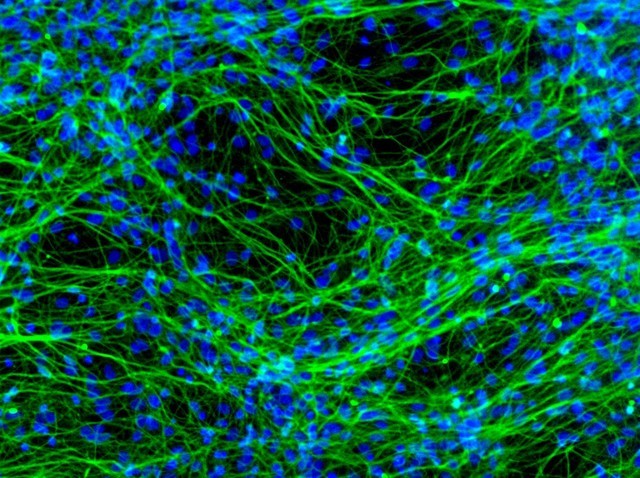 |
Aspen Neuroscience filed to go public on Nasdaq to fund its autologous Parkinson’s disease cell therapy; Market trends. Credit: Wellcome collection |
Aspen Neuroscience filed to go public on Nasdaq to fund its autologous Parkinson’s disease cell therapy
Aspen Neuroscience filed a registration statement with the Securities and Exchange Commission for an initial public offering on the Nasdaq Global Select Market under ticker ASPE [6]. The company has raised approximately $347M since 2018. Lead candidate sasineprocel is a single-dose autologous therapy of dopaminergic neuron precursors derived from patients’ induced pluripotent stem cells, administered intracranially without immunosuppression. As of August 18, 2026, 15 patients had been dosed in the open-label Phase 1/2a ASPIRO trial in Parkinson’s disease, with one participant experiencing serious adverse events related to the surgical procedure. Sasineprocel holds FDA Regenerative Medicine Advanced Therapy and Fast Track designations; Phase 3 dosing is anticipated in the second half of 2027. The filing discloses substantial doubt about Aspen continuing as a going concern.
Beam Therapeutics sued YolTech Therapeutics and Serapha Bio, alleging trade secret misappropriation
Beam Therapeutics filed a complaint in federal court in Massachusetts alleging trade secret misappropriation by former employee Zi Jun (Emma) Wang, Yuxuan (Jensen) Wu, YolTech Therapeutics (Shanghai Yaotang Biotechnology), and Serapha Bio [7]. Beam alleges that Wang co-founded YolTech while working in Beam’s Non-Viral Delivery group, accessed records outside her duties, and, five months after leaving, filed a patent application incorporating Beam’s confidential ionizable lipid information. The complaint alleges that YolTech’s YOLT-202, an in vivo lipid nanoparticle-delivered base editor correcting the SERPINA1 E342K mutation in alpha-1 antitrypsin deficiency, closely resembles Beam’s BEAM-302. YolTech licensed YOLT-202 (now SERP-01) outside Greater China to Serapha for an upfront payment, equity, and over $2B in potential milestones. The allegations have not been adjudicated.
CLINICAL TRIALS AND RESEARCH |
uniQure’s AMT-130 did not reach statistical significance on its primary endpoint at 48 months
uniQure reported updated Phase 1/2 data for ifezuntirgene inilparvovec (AMT-130) in Huntington’s disease [8]. At 48 months, the primary endpoint, composite Unified Huntington’s Disease Rating Scale, showed 44% slowing of disease progression in 12 high-dose patients versus a matched external control, not statistically significant (p=0.144); Total Functional Capacity showed 61% slowing (nominal p=0.008). The company stated that 53% missing data in the updated external control likely understated the treatment effect. An updated 36-month analysis (n=15) showed 80% slowing on the primary measure (nominal p=0.005). As previously disclosed, five high-dose patients (17%) had treatment-related serious adverse events of central nervous system inflammation, all resolved. These results were not part of the BLA submitted on September 2, 2026. uniQure’s share price fell by more than a third at market open [9].
Atsena Therapeutics reported preliminary Phase 1/2 data for ATSN-201 in X-linked retinoschisis
Atsena Therapeutics presented preliminary results from Parts A and B of the Phase 1/2/3 LIGHTHOUSE trial of ATSN-201, a subretinally administered gene therapy for X-linked retinoschisis, at the American Academy of Ophthalmology 2026 Annual Meeting [10]. 18 patients were treated, including three pediatric patients, with no drug-related serious adverse events or dose-limiting toxicities. Of nine patients treated at the pivotal dose (1.1 × 10¹⁰ vector genomes/eye), seven responded on at least one visual function measure: six were microperimetry responders (the Phase 3 primary endpoint) and three met the visual acuity response criterion. Part C enrollment is expected to complete in the first quarter of 2027, with a BLA targeted for the second half of 2028.
COMPANY START-UPS |
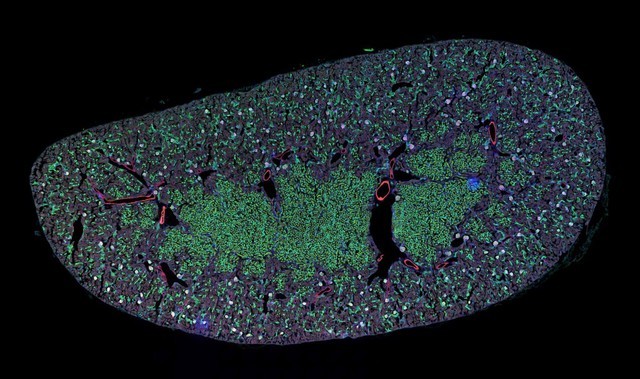 |
Estuary Biotherapeutics launched with $103M to develop kidney-directed AAV gene therapies; Company start-ups. Credit: Wellcome collection |
Estuary Biotherapeutics launched with $103M to develop kidney-directed AAV gene therapies
Estuary Biotherapeutics launched with $103M in total committed financing, comprising a $93M Series A led by RA Capital Management and a $10M seed round co-led by 4BIO Capital and GV, to develop locally delivered gene therapies for autosomal dominant polycystic kidney disease [11]. Lead program EST-201, a full-length PKD2 gene therapy delivered via AAV for patients with PKD2 mutations, is anticipated to enter the clinic in 2027. EST-101 uses the same AAV to deliver a polycystin-1-derived functional region for patients with PKD1 mutations, with clinical entry anticipated in 2028. Both are designed as potentially one-time, kidney-directed treatments to restore polycystin levels across the nephron, building on Yale School of Medicine co-founders’ work showing cystic disease reversal in mice.

References
1. NobelPrize.org. Press release: the Nobel Prize in Physiology or Medicine 2026. Oct 5, 2026.
2. FDA accepts Nanoscope’s BLA for MCO-010 in retinitis pigmentosa. Optometry Times, Sep 11, 2026.
3. Iovance Biotherapeutics. Iovance highlights TIL cell therapy platform across solid tumors at the European Society for Medical Oncology (ESMO) Congress 2026. GlobeNewswire, Oct 19, 2026.
4. Caribou Biosciences. Caribou Biosciences to evaluate strategic alternatives. Oct 6, 2026.
5. Lakefront Biotherapeutics. Lakefront announces sale of preclinical CAR-T programs to Armed Cell Therapeutics. GlobeNewswire, Oct 14, 2026.
6. Aspen Neuroscience, Inc. Form S-1 registration statement. US Securities and Exchange Commission, Oct 9, 2026.
7. Beam Therapeutics Inc. v. Wang ZJ, Wu Y, Shanghai Yaotang Biotechnology Co., Ltd., Serapha Bio, Inc. Complaint. Civil Action No. 1:26-cv-14414-FDS. US District Court for the District of Massachusetts, Sep 25, 2026.
8. uniQure. uniQure announces additional data from ongoing Phase 1/II studies of ifezuntirgene inilparvovec (AMT-130) in Huntington’s disease showing continued slowing of disease progression. GlobeNewswire, Sep 29, 2026.
9. uniQure stock crashes as Huntington’s gene therapy data weaken. Fierce Biotech, Sep 29, 2026.
10. Atsena Therapeutics. Atsena presents positive preliminary safety and efficacy results from parts A and B of the Phase 1/2/3 LIGHTHOUSE trial evaluating ATSN-201 in patients with X-linked retinoschisis. GlobeNewswire, Oct 7, 2026.
11. Estuary Biotherapeutics. Estuary Biotherapeutics launches with $103 million to develop targeted gene therapies for kidney disease. Business Wire, Oct 15, 2026.