
Editor’s picks: the future of CAR-T cell therapy
Cell & Gene Therapy Insights 2026; 12(5)
10.18609/cgti.2026.057
CAR-T cell therapy is no longer defined solely by its origins in hematological oncology. Across autologous and allogeneic platforms, in vivo engineering approaches, and an expanding range of autoimmune indications, the field is contending with questions of access, scalability, and long-term durability as much as with underlying science. These are among the themes that will take center stage at our upcoming CAR-T Special Interest Group, bringing together leading experts across modalities to interrogate where the field is heading. The articles collected here offer a preview of those conversations, drawing together clinical evidence, platform innovation, manufacturing strategy, and global perspective.
Commentary In vivo CAR THERAPY: QUO VADIS? | |
Adrian Bot, Xianghong Li Bot and Li assess the rapidly expanding in vivo CAR ecosystem, reviewing lentiviral vector and LNP-RNA platform technologies alongside emerging clinical evidence and key safety considerations. Early results are encouraging, but the authors argue that in vivo approaches must still match the potency of optimized ex vivo products before meaningful displacement occurs. Genotoxicity, liver tropism, immunogenicity, and re-dosing challenges remain unresolved, and the first wave of in vivo products will likely find their footing in indications where the safety bar is high but the efficacy threshold is lower. “To fully displace conventional CAR-T cell products, in vivo approaches must meet comparable or superior clinical performance bars.” |  |
Interview OFF-THE-SHELF AND ON-TARGET: HOW iPSC-DERIVED CAR-T CELLS COULD DEMOCRATIZE AUTOIMMUNE CELL THERAPY | |
 | John Goulding Goulding makes the case for iPSC-derived allogeneic CAR-T cells as the platform best suited to broadening patient access in autoimmune disease, speaking from the perspective of Fate Therapeutics’ lead program FT819. He addresses safety-by-design, the challenge of trial design in the absence of validated endpoints, outpatient community-based delivery, and the open questions around immune reset durability and re-dosing that the field has yet to resolve. “The future of autoimmunity is being reprogrammed in real time, and iPSC CAR-T cells are helping to write the code.” |
Review AUTOLOGOUS CAR-T CELL IMMUNOTHERAPY FOR AUTOIMMUNE DISEASES: A SYSTEMATIC REVIEW | |
Tisha Singhal, John Maher Synthesizing evidence from 27 studies and 131 patients, Singhal and Maher find that 58% of patients treated with autologous CAR-T cell therapy across a range of autoimmune indications achieved complete remission, with cytokine release syndrome largely mild and manageable. The authors are rigorous in flagging the limitations: non-randomized designs, small sample sizes, and insufficient follow-up. Manufacturing complexity and cost remain significant barriers, though emerging platforms including T-Charge™ and in vivo generation approaches are identified as routes to greater scalability. “Advancing autologous CAR-T cells from primary experimental success to a feasible, scalable therapy for autoimmune disease will require a combination of further clinical research, advancements in manufacturing, and developments in regulatory frameworks.” | 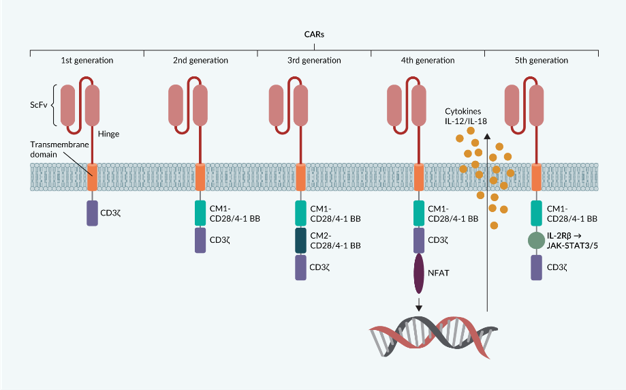 |
Interview MANUFACTURING AND CLINICAL DEVELOPMENT STRATEGIES TO EXPAND ACCESS TO CAR-T CELL THERAPY FOR PATIENTS IN INDIA | |
 | Amit Mookim Mookim describes what expanding CAR-T access means in practice in one of the world’s largest and most complex healthcare markets. Immuneel’s hub-and-spoke model centralizes manufacturing in Bengaluru while extending apheresis and infusion partnerships across dozens of hospitals nationwide, with domestic pricing at an 80–90% reduction relative to developed markets. Limited clinical awareness, an inadequate insurance landscape, and workforce shortages remain the key obstacles. “The single largest piece of the puzzle in India is building scale and accessibility in order to create an ecosystem where the cost of CAR-T therapy can be reduced.” |
Commentary CAR-T CELLS IN B-CELL MEDIATED AUTOIMMUNE DISEASES: DO ALL ROADS LEAD TO ROME? | |
Dimitrios Mougiakakos Writing from the team that treated one of the first patients with CD19-directed CAR-T cell therapy for refractory SLE, Mougiakakos surveys the expanding landscape of T cell-mediated B cell depletion in autoimmune disease. He frames next-generation technologies – multispecific CARs, mRNA-based approaches, CAR NK cells, allogeneic platforms, and bispecific T cell engagers – as parallel tracks rather than competitors, and makes a compelling case for why CAR-T cells may outperform monoclonal antibodies through deeper tissue penetration into the compartments that passive diffusion cannot reach. “Ongoing research heralds a paradigm shift in personalized, durable autoimmune therapies.” | 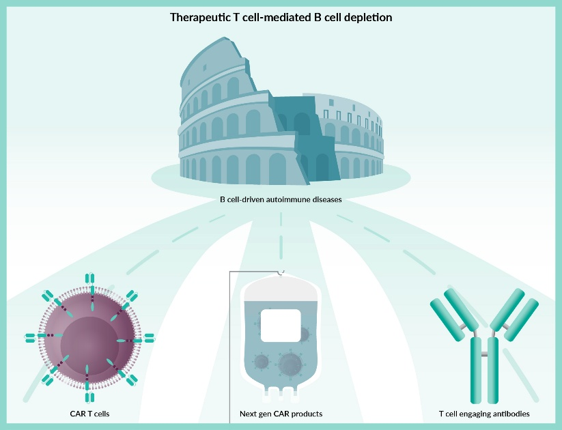 |
Together, these articles capture a field moving beyond proof of concept toward the harder problems of durability, access, and scalability that will determine whether CAR-T cell therapy can fulfill its promise for patients with autoimmune disease and beyond.
Explore the full articles to hear directly from the scientists, clinicians, and industry leaders shaping the next phase of CAR-T cell therapy.
Our CAR-T Special Interest Group on June 16–17 will bring together leading experts to explore these questions in depth. Register now to receive the peer-reviewed white paper and meeting report when they publish.