Human iPSC models of neurodegenerative disease: from application to therapy
Cell & Gene Therapy Insights 2026; 12(3), 326–354
10.18609/cgti.2026.039
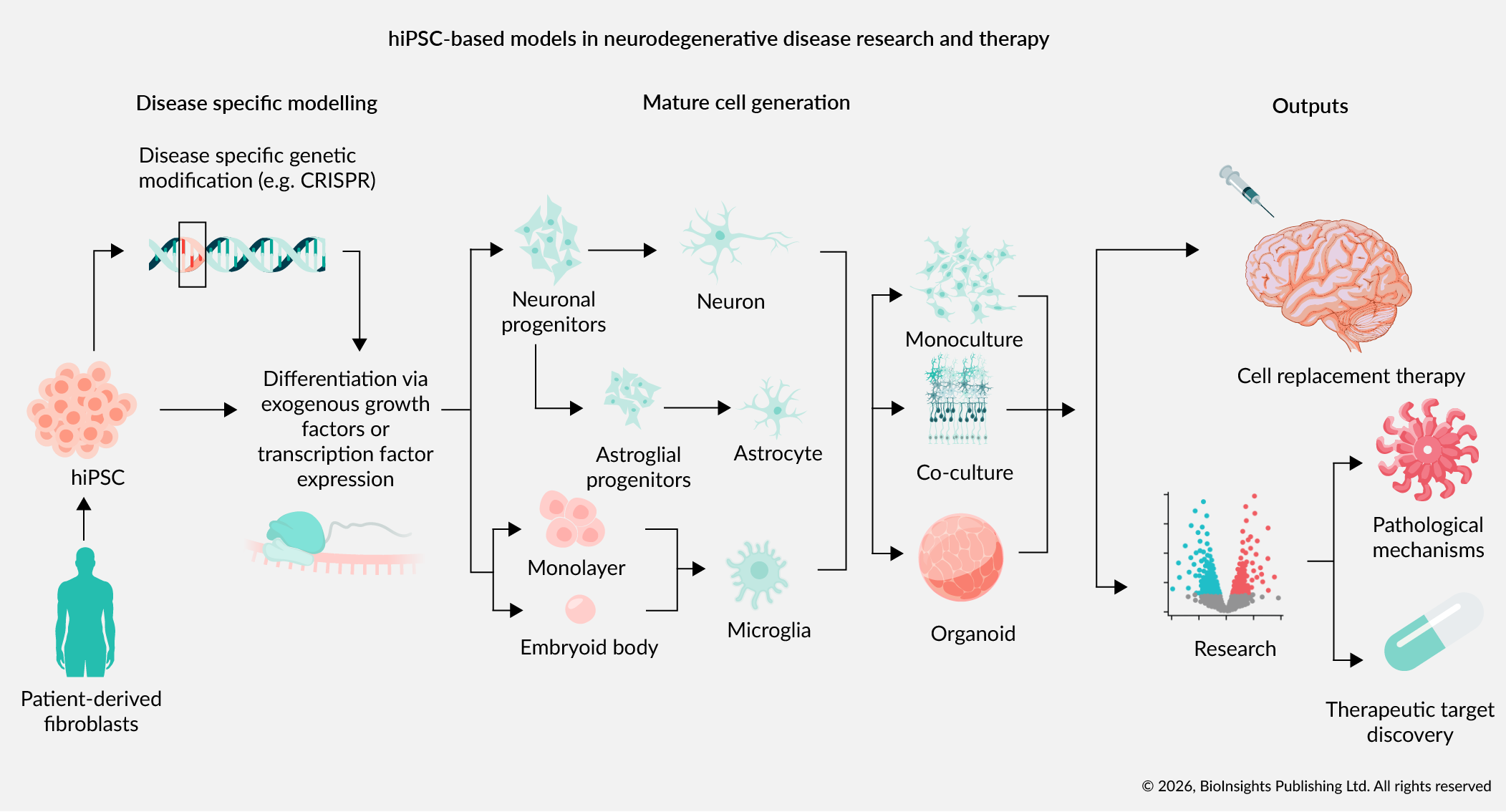
Studying neurodegenerative conditions has been notoriously difficult, in part due to a lack of appropriate models with which to examine the underlying mechanisms of disease. While animal models and post‑mortem tissue have provided major breakthroughs, they each have significant limitations making the development of precise and tractable models a significant research focus. Human Induced pluripotent stem cells (hiPSC) provide an attractive and tractable alternative, as they can be expanded rapidly and differentiated into any desired cell type with the appropriate regional characteristics. In this article we review the broad spectrum of hiPSC models that have been established and have transformed neurodegenerative disease research by providing disease‑specific representations either through use of patient‑derived cells or following genetic editing. We examine recent developments in the adaptation of these models for research and for cell‑replacement therapy, highlighting a future where gene editing and personalised medicine combine to treat previously intractable diseases.