
Industry Insights: Regulatory dynamics and clinical progress in early 2026
Cell & Gene Therapy Insights 2026; 12(2), 251–256
DOI: 10.18609/cgti.2026.032
| The February–March 2026 period involved a mix of regulatory recalibration, late-stage clinical readouts, and continued expansion of platform-enabled cell and gene therapy pipelines. Among the most closely watched developments was the ongoing tension between uniQure and the US FDA over the evidentiary pathway for AMT-130 in Huntington's disease, which became a focal point for broader questions around regulatory flexibility in rare diseases. This dynamic was further amplified by the announcement that Vinay Prasad, director of the FDA's Center for Biologics Evaluation and Research (CBER), will depart the agency in April, introducing additional uncertainty into an already evolving regulatory landscape. Alongside these developments, neuromuscular disease remained a major focus, with multiple Duchenne muscular dystrophy programs reporting interim datasets and advancing regulatory interactions. Beyond therapeutic progress, the period also highlighted growing attention to manufacturing enablement, including AI-supported process development and rising expectations around scalable, commercial-ready production. |  FDA draft guidance formalizes plausible mechanism framework for rare, personalized therapies; Regulatory Changes and Updates. Credit: www.freepik.com |
REGULATORY CHANGES AND UPDATES |
FDA draft guidance formalizes plausible mechanism framework for rare, personalized therapies [1]US Food and Drug Administration. Considerations for the use of the Plausible Mechanism Framework to Develop Individualized Therapies that Target Specific Genetic Conditions with Known Biological Cause. 2026.
Regulatory developments were among the most consequential themes this month. The US FDA's February draft guidance on the plausible mechanism framework signaled a potentially important pathway for individualized gene-editing and RNA-based therapies targeting rare disease biology. While the framework does not lower evidentiary standards, it suggests greater flexibility in how mechanistic rationale, natural history data, and biomarkers may be used in very small patient populations. For developers of bespoke or mutation-targeted therapies, this was one of the clearest signals to date that the agency is attempting to formalize an approach to evaluating ultra-rare, personalized medicines.
FDA rejects Phase 1/2 data for AMT-130, recommends randomized controlled study [2]uniQure. uniQure Provides Regulatory Update on AMT-130 for Huntington's Disease. GlobeNewswire. 2026.
uniQure reported that the FDA did not agree that Phase 1/2 data plus external controls were sufficient to support a marketing application for AMT-130 in Huntington's disease, and strongly recommended a prospective, randomized, sham surgery-controlled study. Dialogue between the parties is said to be ongoing. The update reinforced the tension between regulatory flexibility in principle and the evidentiary burden applied in practice for gene therapies addressing severe rare diseases.
Vinay Prasad to depart CBER in April, adding regulatory leadership uncertainty [3]Choudhury K, Erman M. FDA vaccines chief Vinay Prasad to leave regulator in April. Reuters. 2026.
The news that Vinay Prasad would leave the FDA's CBER in April added another layer of uncertainty to the regulatory landscape. Given CBER's central role in reviewing cell and gene therapy products, leadership turnover could have implications for culture and sponsor interactions, particularly in areas where the agency has recently taken a more conservative position.
FDA lifts clinical hold on MAGNITUDE Phase 3 trial of nexiguran ziclumeran [4]Intellia Therapeutics. Intellia Therapeutics Announces FDA Lift of Clinical Hold on MAGNITUDE Phase 3 Clinical Trial in ATTR-CM. GlobeNewswire. 2026.
Intellia announced that the FDA had lifted the clinical hold on the MAGNITUDE Phase 3 trial of nexiguran ziclumeran in transthyretin amyloidosis with cardiomyopathy, allowing the company to resume enrollment under enhanced liver monitoring and revised exclusion criteria.
Sangamo advances rolling BLA for ST-920 with accelerated approval pathway aligned [5]Sangamo Therapeutics. Sangamo Therapeutics Advances Rolling Submission of BLA to U.S. FDA for ST-920 in Fabry Disease. Sangamo Therapeutics. 2026.
In addition, Sangamo Therapeutics advanced the rolling BLA submission for its Fabry disease gene therapy ST-920, with the FDA aligned that the eGFR slope may support an accelerated approval pathway.
T-knife receives CTA authorization in Europe for CRISPR-edited T cell therapy [6]T-knife Therapeutics. T-knife Therapeutics Announces Authorization of Clinical Trial Application for TK-6302, A Multi-Armored, CRISPR based T cell Therapy for Solid Tumors. GlobeNewswire. 2026.
T-knife Therapeutics also reported authorization of its Clinical Trial Application in Europe for the Phase 1 ATLAS study of TK-6302, a CRISPR-edited, multi-armored PRAME-targeted T cell therapy for solid tumors.
FDA resumes BLA review for deramiocel with August 2026 PDUFA target date [7]Capricor Therapeutics. Capricor Therapeutics Announces Establishment of New PDUFA Date for Deramiocel BLA. 2026.
In Duchenne muscular dystrophy, Capricor reported that the FDA had resumed review of the BLA for deramiocel and assigned a Prescription Drug User Fee Amendments target action date of August 22, 2026.
CLINICAL TRIALS AND RESEARCH |
 | Solid Biosciences reports robust microdystrophin expression in 40-patient INSPIRE DUCHENNE cohort [8]Solid Biosciences. Solid Biosciences Provides Interim Positive Clinical Update on Phase 1/2 INSPIRE DUCHENNE Trial. GlobeNewswire. 2026.Clinical-stage data remained a driver of sector momentum, particularly in neuromuscular and metabolic disease. Duchenne muscular dystrophy was again one of the most active indications. Solid Biosciences reported updated interim data from the ongoing Phase 1/2 INSPIRE DUCHENNE trial of SGT-003, with 40 participants dosed to date. The company described robust microdystrophin expression, evidence of dystrophin-associated protein complex restoration, and signs of improved muscle integrity, alongside stabilization and improvement in left ventricular ejection fraction in the treated cohort. The program's steroid-only prophylactic immunomodulation regimen also continued to be positioned as an operational differentiator. |
| Solid Biosciences reports robust microdystrophin expression in 40-patient INSPIRE DUCHENNE cohort; Clinical Trials and Research. Credit: https://unsplash.com |
REGENXBIO reports favorable one-year functional outcomes for RGX-202 in Duchenne [9]REGENXBIO. REGENXBIO Reports New Positive Interim Data from Phase I/II AFFINITY DUCHENNE Trial of RGX-202. 2026.
REGENXBIO similarly reported positive interim findings from the Phase 1/2 AFFINITY DUCHENNE trial of RGX-202. In seven participants treated at the pivotal dose, one-year functional outcomes reportedly compared favorably to external controls using modeled analyses across timed function tests and North Star Ambulatory Assessment, including in participants aged eight years and older. Cardiac magnetic resonance imaging findings were described as stable at one year, and no serious adverse events or adverse events of special interest were reported in the Phase 1/2 study.
Atamyo reports greater than 90% γ-sarcoglycan restoration in first LGMD-R5 patients [10]Atamyo Therapeutics. Atamyo Therapeutics Presents Promising Results in the First Patients Treated With Its ATA-200 Gene Therapy in the Clinical Trial Targeting LGMD-R5 Limb-girdle Muscular Dystrophy. Bus. Wire. 2026.
Outside Duchenne, Atamyo Therapeutics presented early clinical data for ATA-200 in LGMD-R5 limb-girdle muscular dystrophy. In the first two evaluable patients, muscle biopsies showed greater than 90% γ-sarcoglycan-positive fibers at six months, alongside reductions in creatine phosphokinase and transaminases and early functional signals at nine months. The data provides early supporting evidence that systemic AAV gene transfer can be explored across a broader range of neuromuscular disorders.
Ultragenyx Phase 3 data show DTX301 reduces ammonia levels in OTC deficiency [11]Ultragenyx. Ultragenyx Announces Positive 36-Week Data from Phase 3 Study of DTX301 AAV8 Gene Therapy for the Treatment of Ornithine Transcarbamylase (OTC) Deficiency. Ultragenyx. 2026.Ultragenyx announced positive 36-week Phase 3 data for the AAV8 gene therapy DTX301 in ornithine transcarbamylase deficiency. Treated patients showed an 18% reduction in 24-hour plasma ammonia area under the curve versus placebo at Week 36, with mean ammonia levels maintained in the normal range despite some reduction in scavenger medications and increased protein intake. The study also reported improvement on patient global impression measures, suggesting a clinically meaningful impact beyond biochemical control. |  |
| Ultragenyx Phase 3 data show DTX301 reduces ammonia levels in OTC deficiency; Clinical Trials and Research. Credit: www.sartorius.com |
Sana reports continued C-peptide production at 14 months in hypoimmune islet transplant [12]Sana Biotechnology. Sana Biotechnology Announces Continued Positive Clinical Results Through 14 Months from Type 1 Diabetes Study of Islet Cell Transplantation Without Immunosuppression. Sana Biotechnol. 2026.
Sana Biotechnology reported 14-month follow-up from a first-in-human study of hypoimmune primary islet cell transplantation without immunosuppression in type 1 diabetes. Continued C-peptide production and meal-responsive insulin secretion were reported, with no new safety concerns. The single patient dataset remains early and derived from an investigator-sponsored study, but it continues to support the translational potential of hypoimmune cell engineering as a strategy to extend allogeneic cell therapy beyond oncology.
Quell reports calcineurin inhibitor reduction in nine-patient CAR-Treg transplant study [13]Quell Therapeutics. Quell Therapeutics Demonstrates Safety, Phenotypic Stability, Durability and Early Efficacy with Phenotype Locked CAR Tregs in LIBERATE Phase 1/2 Liver Transplant Study. GlobeNewswire. 2026.
Quell Therapeutics also released interim top-line data from its LIBERATE Phase 1/2 liver transplant study of QEL-001, a phenotype-locked anti-HLA-A2 CAR-Treg autologous cell therapy. The company reported dosing of nine patients with no serious adverse events, no dose-limiting toxicity, and evidence that treated patients could reduce calcineurin inhibitor-based immunosuppression (with some rejection events observed at very low immunosuppression levels). The findings support continued interest in regulatory T cell engineering as a potential route to durable immune modulation in transplantation and autoimmune disease.
 | Aspen reports cell engraftment and functional improvement at 12 months in ASPIRO trial [14]Aspen Neuroscience. Aspen Neuroscience Announces Positive 12 Month Data from its ASPIRO Clinical Trial in a Late Breaking Oral Presentation at the AD/PD 2026 International Conference on Alzheimer's and Parkinson's Diseases. PR Newswire. 2026.Aspen Neuroscience reported 12-month Phase 1/2a data from its ASPIRO trial of an autologous iPSC-derived dopaminergic neuron therapy in Parkinson's disease. Early results from eight patients showed continued safety, evidence of cell engraftment, and numerical improvements across functional and quality-of-life measures without the need for immunosuppression, supporting further advancement toward Phase 3. |
| Aspen reports cell engraftment and functional improvement at 12 months in ASPIRO trial; Clinical Trials and Research. Credit: www.freepik.com |
COLLABORATIONS, TOOLS, AND TECHNOLOGIES |
Zelluna and Etcembly partner on machine learning-designed TCR-NK receptors for solid tumors [15]Zelluna. Zelluna announces collaboration with Etcembly for AI-enabled TCR engineering. GlobeNewswire. 2026.
Zelluna announced a collaboration with Etcembly to engineer high-affinity T cell receptors targeting KKLC1 for use in Zelluna's allogeneic TCR-NK platform for solid tumors. The agreement builds on prior work around a MAGE-A4-targeted receptor and reflects continued convergence between machine learning-enabled receptor design and off-the-shelf cell therapy development. For the field, this is notable less as a near-term clinical catalyst and more as an example of how computational design tools are being integrated into next-generation cell therapy discovery.
BioCurie secures ARPA-H funding to build AI-driven CGT process development platform [16]BioCurie. BioCurie to Receive Up to $9.3 Million ARPA-H Award to Build AI Platform for Scalable Gene Therapy Manufacturing. PRWeb. 2026.
BioCurie's announcement of up to $9.3M in ARPA-H funding addressed another persistent bottleneck: manufacturing. The company plans to develop an AI-driven digital platform intended to replace trial-and-error process development with computational modeling and simulation for cell and gene therapy production. With collaborators including Caring Cross, St. Jude Children's Research Hospital, and Center for Breakthrough Medicines, the project reflects increasing government and industry interest in digital infrastructure to support process robustness and scale-up across viral and non-viral modalities.
Sartorius launches Eveo platform with modeled up to 90% cost reduction in CAR-T workflows [17]Sartorius. Sartorius launches next-generation platform to boost efficiency in cell therapy production. 2026.Sartorius launched its Eveo Cell Therapy Platform, an integrated, automated system designed to address scalability and cost challenges in autologous cell therapy production. The platform enables multi-parallel processing within a compact footprint, with pilot data suggesting an almost fourfold increase in output and modeling suggesting potential cost reductions of up to 90% in CAR-T workflows. | 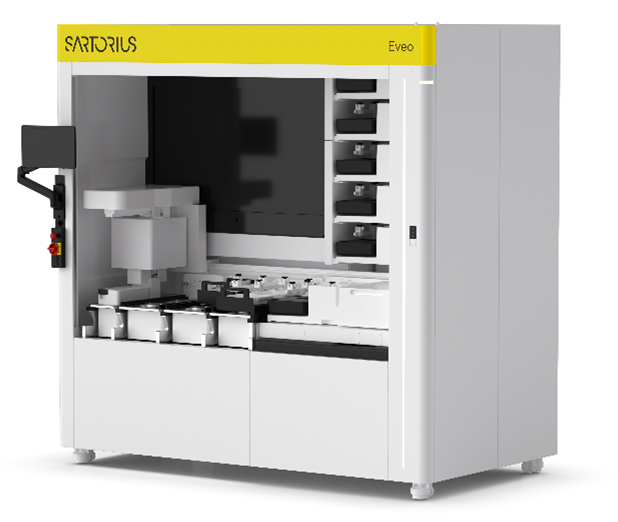 |
| Sartorius launches Eveo platform with modeled up to 90% cost reduction in CAR-T workflows; Collaborations, Tools and Technologies. Credit: www.sartorius.com |
AstraZeneca establishes cell therapy manufacturing and innovation center in Shanghai [18]AstraZeneca. AstraZeneca announces the establishment of a commercial cell therapy manufacturing and supply base and innovation center in Shanghai. AstraZeneca. 2026.
At the infrastructure level, AstraZeneca announced plans to establish a commercial cell therapy manufacturing and supply base and innovation center in Shanghai, alongside a Sino-UK life sciences collaboration with academic and financial partners. The move reflects continued investment by large biopharma in end-to-end cell therapy capabilities and highlights China's growing role as a hub for advanced therapy manufacturing, clinical development, and cross-border innovation.
 | Beam introduces BEAM-304, extending base editing franchise into phenylketonuria [19]Beam Therapeutics. Beam Therapeutics Reports Fourth Quarter and Year-End 2025 Financial Results and Announces New Liver-Targeted Genetic Disease Program in Phenylketonuria (PKU). Beam Ther. 2026.Beam Therapeutics' introduction of BEAM-304 for phenylketonuria also fits this broader platform story. Although announced within an earnings release, the program is strategically notable because it extends Beam's liver-targeted base editing franchise and proposes a development model in which multiple mutation-specific editors could be evaluated within a single clinical program. That approach aligns closely with the sector's current push toward modular development frameworks for genetically heterogeneous diseases. |
| Beam introduces BEAM-304, extending base editing franchise into phenylketonuria; Collaborations, Tools and Technologies. Credit: www.freepik.com |
MARKET TRENDS |
Global CGT manufacturing market projected to reach $146.2B by 2032 [20]Bisht S. Cell and Gene Therapy Manufacturing Market By Type (Cell Therapy Manufacturing – Stem Cell Therapy, Non-Stem Cell Therapy; Gene Therapy Manufacturing); By Scale (Pre-commercial/R&D Scale Manufacturing, Commercial Scale Manufacturing); By Mode (Contract Manufacturing, In-house Manufacturing); By Work Flow (Cell Processing, Cell Banking, Process Development, Fill & Finish Operations, Analytical and Quality Testing, Raw Material Testing, Vector Production, Others) – Growth, Share, Opportunities & Competitive Analysis, 2024 – 2032. Credence Res. 2026.
Broader market signals suggested that confidence in long-term sector growth remains intact, even as regulatory and manufacturing constraints continue to shape execution risk. A market report from Credence Research projected that the global cell and gene therapy manufacturing market would grow from $19.3B in 2024 to $146.2B by 2032, driven by commercial demand, viral vector capacity expansion, automation, and increasing reliance on CDMO partners. While such projections should always be interpreted cautiously, the report is directionally consistent with the field's present emphasis on industrialization, analytics, and scalable manufacturing systems.

References
1. US Food and Drug Administration. Considerations for the use of the Plausible Mechanism Framework to Develop Individualized Therapies that Target Specific Genetic Conditions with Known Biological Cause. 2026.
2. uniQure. uniQure Provides Regulatory Update on AMT-130 for Huntington's Disease. GlobeNewswire. 2026.
3. Choudhury K, Erman M. FDA vaccines chief Vinay Prasad to leave regulator in April. Reuters. 2026.
4. Intellia Therapeutics. Intellia Therapeutics Announces FDA Lift of Clinical Hold on MAGNITUDE Phase 3 Clinical Trial in ATTR-CM. GlobeNewswire. 2026.
5. Sangamo Therapeutics. Sangamo Therapeutics Advances Rolling Submission of BLA to U.S. FDA for ST-920 in Fabry Disease. Sangamo Therapeutics. 2026.
6. T-knife Therapeutics. T-knife Therapeutics Announces Authorization of Clinical Trial Application for TK-6302, A Multi-Armored, CRISPR based T cell Therapy for Solid Tumors. GlobeNewswire. 2026.
7. Capricor Therapeutics. Capricor Therapeutics Announces Establishment of New PDUFA Date for Deramiocel BLA. 2026.
8. Solid Biosciences. Solid Biosciences Provides Interim Positive Clinical Update on Phase 1/2 INSPIRE DUCHENNE Trial. GlobeNewswire. 2026.
9. REGENXBIO. REGENXBIO Reports New Positive Interim Data from Phase I/II AFFINITY DUCHENNE Trial of RGX-202. 2026.
10. Atamyo Therapeutics. Atamyo Therapeutics Presents Promising Results in the First Patients Treated With Its ATA-200 Gene Therapy in the Clinical Trial Targeting LGMD-R5 Limb-girdle Muscular Dystrophy. Bus. Wire. 2026.
11. Ultragenyx. Ultragenyx Announces Positive 36-Week Data from Phase 3 Study of DTX301 AAV8 Gene Therapy for the Treatment of Ornithine Transcarbamylase (OTC) Deficiency. Ultragenyx. 2026.
12. Sana Biotechnology. Sana Biotechnology Announces Continued Positive Clinical Results Through 14 Months from Type 1 Diabetes Study of Islet Cell Transplantation Without Immunosuppression. Sana Biotechnol. 2026.
13. Quell Therapeutics. Quell Therapeutics Demonstrates Safety, Phenotypic Stability, Durability and Early Efficacy with Phenotype Locked CAR Tregs in LIBERATE Phase 1/2 Liver Transplant Study. GlobeNewswire. 2026.
14. Aspen Neuroscience. Aspen Neuroscience Announces Positive 12 Month Data from its ASPIRO Clinical Trial in a Late Breaking Oral Presentation at the AD/PD 2026 International Conference on Alzheimer's and Parkinson's Diseases. PR Newswire. 2026.
15. Zelluna. Zelluna announces collaboration with Etcembly for AI-enabled TCR engineering. GlobeNewswire. 2026.
16. BioCurie. BioCurie to Receive Up to $9.3 Million ARPA-H Award to Build AI Platform for Scalable Gene Therapy Manufacturing. PRWeb. 2026.
17. Sartorius. Sartorius launches next-generation platform to boost efficiency in cell therapy production. 2026.
18. AstraZeneca. AstraZeneca announces the establishment of a commercial cell therapy manufacturing and supply base and innovation center in Shanghai. AstraZeneca. 2026.
19. Beam Therapeutics. Beam Therapeutics Reports Fourth Quarter and Year-End 2025 Financial Results and Announces New Liver-Targeted Genetic Disease Program in Phenylketonuria (PKU). Beam Ther. 2026.
20. Bisht S. Cell and Gene Therapy Manufacturing Market By Type (Cell Therapy Manufacturing – Stem Cell Therapy, Non-Stem Cell Therapy; Gene Therapy Manufacturing); By Scale (Pre-commercial/R&D Scale Manufacturing, Commercial Scale Manufacturing); By Mode (Contract Manufacturing, In-house Manufacturing); By Work Flow (Cell Processing, Cell Banking, Process Development, Fill & Finish Operations, Analytical and Quality Testing, Raw Material Testing, Vector Production, Others) – Growth, Share, Opportunities & Competitive Analysis, 2024 – 2032. Credence Res. 2026.