Advancing oligonucleotide therapeutics: conjugation strategies for extrahepatic delivery
Bioconjugation Insights 2025; 1(3), 97–102
DOI: 10.18609/bci.2025.021

Expanding bioconjugation beyond ADCs
The field of bioconjugation for oligonucleotide delivery represents a rapidly evolving discipline that extends well beyond the established framework of ADCs. Oligonucleotides present distinct hurdles compared to small-molecule drugs, including poor cellular uptake, instability in biological systems, and the critical need for precise tissue targeting. These challenges have driven innovation in oligonucleotide conjugation with diverse delivery vehicles, including but not limited to small molecules, lipids, fatty acids, N-acetylgalactosamine (GalNAc), and peptides.
The conjugation of oligonucleotides to GalNAc has revolutionized hepatic delivery by targeting the asialoglycoprotein receptor, which is highly expressed on hepatocytes. This targeted approach enables efficient liver-specific uptake and has become the gold standard for hepatic oligonucleotide delivery. Building on this success, researchers are now focusing on extrahepatic delivery, exploring novel ligands that can direct oligonucleotide therapeutics to tissues including the heart, muscle, brain, and kidney.
Recent advances demonstrate the potential for expanding tissue targeting capabilities. Diverse long-chain lipid conjugates have shown functional extrahepatic siRNA delivery in vivo to renal, muscular, and cardiac tissues. Similarly, chemically modified carbohydrate conjugates, such as renal tubule-targeting carbohydrate, have shown efficient and selective kidney targeting, illustrating the potential for developing a comprehensive toolkit of targeting ligands.
Peptide-oligonucleotide conjugates represent another promising frontier. Peptides can target numerous cell surface receptors, offering specificity for muscle-targeting or kidney-targeting peptides. Cell-penetrating peptides provide the additional advantage of facilitating cargo transport across cell membranes, significantly enhancing cellular uptake, which is a major bottleneck for oligonucleotide therapeutics.
Beyond delivery enhancement, oligonucleotide-small-molecule conjugates offer synergistic therapeutic effects—the oligonucleotide and small-molecule payload work together to enhance therapeutic outcomes. For example, antisense oligonucleotides (ASOs) conjugated with JQ1, a nuclear importer, have demonstrated superior performance to unmodified counterparts for splice switching and mRNA knockdown in the nucleus.
Optimizing conjugates for enhanced uptake & specificity
Oligonucleotides face significant barriers in reaching intracellular targets due to their large size, often high charge, and susceptibility to nuclease degradation. These properties impede cellular membrane crossing and limit target accessibility. Optimization strategies focus primarily on three objectives: improving cellular uptake, enhancing tissue specificity, and increasing stability.
Ligand conjugation for targeted delivery represents the most direct and successful approach. This strategy involves attaching specific molecules or ligands to oligonucleotides that bind to receptors on target cell surfaces, triggering receptor-mediated endocytosis. The tri-GalNAc conjugate system demonstrates this approach, with optimization involving different linker chemistries and branching patterns to enhance binding affinity and internalization. Oligonucleotide conjugates with lipids such as cholesterol have been used to improve uptake. Cholesterol-conjugated oligonucleotides are associated with lipoproteins such as high-density lipoproteins (HDLs) and low-density lipoproteins (LDLs), enabling cellular uptake through lipoprotein receptors. This approach leverages natural cellular uptake mechanisms to improve oligonucleotide delivery efficiency.
Chemical modifications to the oligonucleotide backbone provide complementary improvements to conjugation strategies. Replacing phosphodiester backbones with phosphorothioate linkages significantly improves resistance to enzymatic degradation, increasing half-life. Neutral backbones, including amide-type linkages, are being extensively explored, with four FDA-approved Duchenne muscular dystrophy drugs containing phosphorodiamidate morpholino oligomers. Additionally, sugar modifications such as 2΄-O-methyl, 2΄-O-methoxyethyl, and 2΄-fluoro can enhance binding affinity.
Novel conjugation chemistry and linker optimization represent critical components of successful conjugate development. The linker connecting the oligonucleotide with partner compounds must maintain stability to prevent premature cleavage while remaining cleavable under specific intracellular conditions in the presence of certain enzymes or at specific pH levels to release the active oligonucleotide. Pharmacokinetic properties can be optimized by tuning linker length and hydrophobicity to improve absorption, distribution, metabolism, and excretion properties.
Strategic considerations for conjugate selection
Selecting a conjugate type for specific delivery barriers requires a holistic perspective dependent on therapeutic goals. A successful conjugate must effectively deliver oligonucleotides while maintaining safety, stability, and manufacturability.
Target tissue and cell type selection represent the most critical starting point, as the desired destination dictates conjugate choice. While liver targeting through GalNAc conjugates serves as the established standard, extrahepatic tissues present greater delivery hurdles. These tissues require alternative approaches, including peptide-oligonucleotide conjugates such as muscle-targeting peptides designed to bind specific receptors on muscle or cardiac cells.
The brain presents particular challenges due to the blood-brain barrier (BBB). Researchers are exploring conjugates with peptides facilitating transport across the barrier or directly targeting neuronal receptors. The nature of the oligonucleotide, whether siRNA, ASOs, or mRNA, influences conjugate choice based on chemical properties.
Larger molecules, such as mRNA, are generally too large for direct conjugation with small molecules and are preferably delivered through nanoparticle systems like lipid nanoparticles. Smaller oligonucleotides, including siRNAs and ASOs, are more amenable to direct conjugation with small molecules, peptides, or antibodies. The distinct mechanisms of siRNAs and ASOs require conjugate and linker designs that facilitate oligonucleotide release in the correct intracellular compartment.
Pharmacokinetics and biodistribution considerations significantly influence absorption, distribution, metabolism, and excretion properties. Some conjugates can extend oligonucleotide half-life in circulation by protecting against nuclease degradation, potentially reducing dosing frequency. Conjugates influence clearance mechanisms, with some cleared renally while others are taken up by the liver or other tissues, impacting off-target effects and toxicity.
Safety profiles require careful consideration, particularly for long-term therapies. Conjugates and metabolic byproducts must be non-toxic, with linkers designed to release payloads without generating harmful metabolites. Production scalability and cost considerations cannot be overlooked, as chosen conjugation chemistry must be scalable for large-scale manufacturing under GMP guidelines.
Targeting extrahepatic tissues: opportunities & obstacles
The success of GalNAc conjugates in liver targeting has inspired exploration of other disease-relevant tissues and cell types. Skeletal and cardiac muscles represent promising targets for diseases such as Duchenne muscular dystrophy and cardiomyopathies, which often result from genetic defects suitable for oligonucleotide intervention.
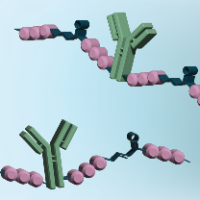
Currently approved oligonucleotide drugs for Duchenne muscular dystrophy are phosphorodiamidate morpholino oligomers that suffer from limited efficacy, necessitating high-dosage regimens. Antibody-oligonucleotide conjugates targeting transferrin receptor 1 (TfR1) have demonstrated successful oligonucleotide delivery to skeletal and cardiac muscles in animal models, achieving effective gene silencing. Peptide-oligonucleotide conjugates offer an alternative approach, with muscle-specific peptides and cell-penetrating peptides being actively screened for high-affinity binding and efficient endocytosis.
The CNS represents another high-priority target, with neurodegenerative diseases such as Huntington’s disease, Alzheimer’s disease, and amyotrophic lateral sclerosis having strong genetic components suitable for gene silencing therapies. The success of Nusinersen—delivered intrathecally for spinal muscular atrophy treatment—demonstrates oligonucleotide therapeutic potential in the CNS. However, intrathecal injections are invasive, and systemic delivery alternatives are being actively explored.
The BBB represents the foremost hurdle to CNS delivery. Promising approaches include conjugating oligonucleotides to antibodies targeting BBB endothelial cell receptors, such as the transferrin receptor, leveraging natural transcytosis pathways. Brain-penetrating peptides offer another strategy, with short peptides capable of crossing the BBB, potentially enabling systemic delivery with broad CNS distribution.
Kidney targeting presents unique difficulties due to rapid renal clearance, which eliminates drugs from the bloodstream before the therapeutic effect occurs. This issue is compounded by non-specific uptake and passive accumulation in renal tissues, limiting efficacy and potentially causing off-target effects. Renal tubule-targeting carbohydrates have demonstrated selective delivery to proximal convoluted tubules. Long-chain lipid conjugates have also shown selective siRNA delivery to kidney tissues, providing additional targeting approaches.
Hybrid conjugates for complex delivery barriers
Extrahepatic delivery challenges may require multi-component approaches to overcome diverse biological barriers. While single-component conjugates such as GalNAc have succeeded in liver targeting, extrahepatic tissues may benefit from hybrid or combination conjugates that leverage complementary molecular components.
The concept of multi-component conjugates centers on single molecules performing multiple functions, with each component addressing different barriers. For example, oligonucleotides with peptide and lipid conjugates at 5΄ and 3΄ ends can provide specificity and membrane disruption capabilities. Peptides offer specificity through binding to diverse receptors on extrahepatic cell surfaces, while lipids with amphiphilic properties can disrupt endosomal membranes to facilitate oligonucleotide release into the cytoplasm.
Hybrid conjugates represent a promising strategy for overcoming BBB obstacles and minimizing off-target effects, which remain significant limitations for non-targeted delivery. The future of extrahepatic delivery lies in the intelligent design of hybrid conjugates combining optimal properties from multiple molecular classes. This will enable engineered delivery platforms that overcome complex biological barriers while moving beyond one-size-fits-all approaches.
Future innovations in tissue-specific delivery
The future of tissue-specific drug delivery represents a convergence of chemistry, engineering, and computational biology. It is moving toward a highly personalized and programmable era in which delivery systems are as meticulously designed as therapeutic payloads themselves.
Multimodal and tunable conjugates represent a key innovation direction. Current conjugates typically target single tissues, while future developments may bring conjugates addressing multiple delivery challenges simultaneously. Rather than single-targeting ligands, conjugates may incorporate multiple ligands optimized for specific functions, such as a single therapeutic equipped with peptides for cell type targeting and lipids for endosomal escape.
Advanced biocompatible click chemistry techniques will facilitate the synthesis of complex hybrid conjugates, enabling modular approaches to rapidly optimize conjugates for specific therapeutic needs. The development of novel linkers for smart stimuli-responsive delivery systems represents another innovation area, with linkers responsive to biological environments such as pH or specific enzymes.
More precise and diverse options will enhance current enzyme-cleavable and pH-responsive linkers, enabling conjugates that remain stable in circulation but release payloads only upon encountering specific conditions. This on-demand release approach will dramatically improve efficacy while reducing off-target toxicity.
Future approaches may harness endogenous delivery mechanisms rather than introduce foreign substances. Engineering oligonucleotides to associate with specific lipoprotein particles, such as HDLs or LDLs, could enable natural transport to specific tissues.
Machine learning and artificial intelligence will play crucial roles in designing multi-component conjugates. AI-powered algorithms has the potential to analyze vast conjugate structures, chemistry, and preclinical performance datasets to predict in vivo behavior. This computational approach will enable screening large numbers of conjugates, accelerating drug discovery and optimization processes.
The next wave of oligonucleotide conjugates will extend beyond liver targeting through targeted and diversified approaches, representing a significant advancement in precision medicine for oligonucleotide therapeutics.
Biography
Sritama Bose is the Associate Director of Chemistry at Orfonyx Bio, where she leads multiple projects on nucleic acid therapeutic development. Previously, she was Head of Chemistry Research & Innovation at Nucleic Acid Therapy Accelerator. She holds a PhD in Synthetic Organic Chemistry from Indian Association for the Cultivation of Science, India with international postdoctoral experiences including a specialization in nucleic acid chemistry at Durham University, UK. Sritama joined Sygnature Discovery, a drug discovery CRO, where she applied her organic synthesis expertise as a Senior Scientist, gaining valuable medicinal chemistry insights that she now brings to her leadership role at Orfonyx Bio.
Affiliation
Sritama Bose PhD, Associate Director of Chemistry, Orfonyx Bio, Oxford, UK
Authorship & Conflict of Interest
Contributions: The named author takes responsibility for the integrity of the work as a whole, and has given her approval for this version to be published.
Acknowledgements: None.
Disclosure and potential conflicts of interest: The author has no conflicts of interest.
Funding declaration: The author received no financial support for the research, authorship and/or publication of this article.
Article & copyright information
Copyright: Published by Bioconjugation Insights under Creative Commons License Deed CC BY NC ND 4.0 which allows anyone to copy, distribute, and transmit the article provided it is properly attributed in the manner specified below. No commercial use without permission.
Attribution: Copyright © 2025 Sritama Boses. Published by Bioconjugation Insights under Creative Commons License Deed CC BY NC ND 4.0.
Article source: Invited.
Revised manuscript received: Sep 17, 2025.
Publication date: Oct 1, 2025.