The promise of antibody-oligonucleotide conjugates for neurological diseases
Bioconjugation Insights 2025; 1(3), 81–86
DOI: 10.18609/bci.2025.018

Listen to the podcast here, or read the interview below.
If you enjoyed this episode, you can listen to all episodes from The BioInsights Podcast wherever you normally get your podcasts.
Follow the Podcast to make sure you don't miss the next episode.
You have worked extensively with neurological diseases. What inspired your interest in exploring the translation of ADCs, which are traditionally oncology-focused, and moving them into this field?
KH: My interest in translating ADCs into the neurological space was catalyzed by the enormous impact that ADCs have had in oncology over the last decades. In oncology, ADCs have transformed treatment by adding a new level of precision.
They deliver potent cytotoxic agents directly to tumor cells, which has significantly reduced, although not eliminated, the damage to healthy tissues. This targeted approach has led to significant clinical benefits, such as significantly improved response rates, longer progression-free survival, and, in some cases, turning aggressive cancers into manageable chronic conditions.
As of today, there are 14 FDA-approved ADCs, and hundreds in various stages of clinical development. It is a success story. This success, both scientifically and clinically, has naturally raised the questions: could we apply the same principle in the targeted delivery of potent agents? And, more importantly, can we apply this to other challenging diseases, specifically the central nervous system (CNS) space?
The main hurdle of neurological diseases, such as Alzheimer’s disease or ALS, is similar to oncology. It is about delivering therapies precisely to affected cells and tissues. In ADCs, this is solved through the use of antibodies that specifically target tumor cells. For antibody-oligonucleotide conjugates (AOCs), the same delivery strategy is being applied.
The aim is to get oligonucleotide therapies across the blood–brain barrier (BBB) into brain cells. The main difference is the payloads that are needed for neurological diseases. We are not trying to kill cells; we are trying to do the opposite by modulating gene expression. By reducing toxic protein levels or correcting dysfunctional pathways within the brain, that is where the shift from ADCs to AOCs comes in.
It is an evolution of the ADC concept, but with a payload that is specifically suited and tailored to the biology of CNS diseases. In short, I think it was the clinical success of ADCs and how they changed outcomes for cancer patients that made us ask, ‘Why can’t we apply the same precision approach to the brain?’ That question has been with us and at the core of much of what we have done recently.
Would you be able to give more details on how these AOCs differ from ADCs and what makes them particularly exciting for neurological applications?
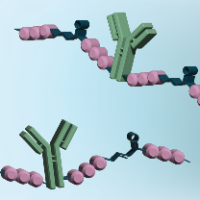
KH: ADCs and AOCs share some basic architecture where an antibody is linked to a payload, in essence, but then, the nature and purpose of the payload are almost entirely different.
As mentioned, AOCs are not delivering small-molecule toxins like ADCs—AOCs carry oligonucleotides and modulate gene expression. They are designed to intervene in protein production at the mRNA level. That can be used, for instance, to silence toxic genes, correct splicing errors, or reduce the production of pathogenic proteins within the brain.
This kind of upstream intervention is especially well-suited for neurological diseases, often when dealing with chronic conditions, specifically genetically driven conditions. Many of these CNS disorders, such as Huntington’s and certain forms of epilepsy, are driven by genetic mutations or dysregulated transcripts.
Oligonucleotides offer the potential to correct the underlying molecular dysfunctions. They do this rather than just treating symptoms or slowing progression. This is the powerful thing about oligonucleotides, but at the same time, delivery to the brain remains a massive challenge. That is what we are trying to solve with AOCs. In a nutshell, what excites me most in this context is how modular AOCs are and the transferability of the approach across multiple neurological conditions.
One of the biggest challenges in treating brain disorders is the BBB. How are you and your team approaching the challenge of getting AOCs across this barrier, and are there particular delivery technologies or strategies that you have been excited about?
KH: The BBB is one of the most defining challenges in the whole field of neurological drug development. This is for good reason, as the BBB has an important biological role as a gatekeeper. That means that it retains the brain homeostasis while also protecting the brain from toxins and pathogens.
Unfortunately, this also means that it prevents the vast majority of therapeutic molecules from entering the brain. This is especially true for large and charged molecules such as oligonucleotides. They do not cross the BBB unassisted, and for that reason, getting oligonucleotides into the brain requires direct administration. Intrathecal and intracerebroventricular injections are often used, but these are invasive techniques that come with a patient burden. They limit the drug distribution, mainly to the spinal cord and the nearby brain regions, but the rest of the brain is not as homogeneously treated by the oligonucleotide.
This is where AOCs get exciting. Oligonucleotides can take advantage of a very natural cellular response, and a process called receptor-mediated endocytosis and transcytosis—a mechanism that the brain uses to import essential molecules. There are specific receptors, such as the transferrin receptor (TfR), and these are expressed on the endothelial cells that are lining the BBB. When a molecule binds to one of these receptors, it can be shuttled across the BBB and reach the inside of the brain.
With AOCs, antibodies are being designed to bind to those receptors at the BBB and attach the oligonucleotide payload to the antibody. The antibody acts as a carrier that allows the whole AOC to be transported across the BBB. In the past, there have been promising preclinical results showing that these AOCs can efficiently reach the brain parenchyma following intravenous administration.
Ultimately, the goal is systemic administration—something that can be given to a patient in a routine setting and will result in meaningful concentrations of a therapeutic oligonucleotide in the brain. When this is achieved, it will be a step forward in making neurological therapies both more patient-friendly and scalable.
What do you think are the key design elements, such as conjugation techniques or linker chemistries, that impact success in AOC design and development?
KH: Designing an effective AOC is about precision engineering, as it is a multi-component system. You have an antibody, a linker, and an oligonucleotide, and every piece needs to be optimized not only individually but also in terms of how these pieces function together once they are combined into the AOC.
Starting with conjugation, one key lesson learned from the ADC field that can be translated into the AOC field is the value of site-specific conjugation. With ADCs, random conjugation has resulted in heterogeneous products—they have variable pharmacokinetic profiles, unpredictable efficacy, and toxicity profiles. In AOCs, this matters even more. The reason is that oligonucleotides are large, negatively charged molecules, meaning they can significantly affect the antibody’s behavior. This is especially true if the oligonucleotide is not attached in the right position within the antibody.
Often, enzyme-mediated methods are used, such as transglutaminase-based conjugation. This way, it can be ensured that the oligonucleotide is attached to a defined location while also being far enough away from the antigen-binding site, so as not to interfere with antigen binding.
The next consideration is the linker. In oncology, both cleavable and non-cleavable linkers have been utilized. This also applies to AOCs, where both types of linkers can be considered. However, there is an added twist—oligonucleotides need to reach the cytoplasm or the nucleus of a cell and be released for them to be effective. One option is to use cleavable linkers that respond to intracellular environments, so the oligonucleotide can be released. The stability in circulation is paramount because if the linker breaks down too early, all of the payload in the circulation is lost before it makes it across the BBB, which is not the desired outcome.
When designing AOCs, the oligonucleotide component also requires careful chemical modification to ensure stability and efficacy. Unfortunately, unmodified oligonucleotides are rapidly degraded, and this happens mostly by nucleases, in the bloodstream and inside cells, for instance, in the lysosomes. Incorporating modifications that assure the stability of the oligonucleotides is essential here.
Finally, the antibodies’ target at the BBB has a significant impact. For brain delivery, antibodies that target receptors with good transcytosis behavior, such as TfR, tend to have more of an impact. There are also other factors such as receptor density, expression pattern, also internalization rates. They all influence how well the AOC will be transported across the BBB, but also enter the disease-relevant cells once it is in the brain. This means that the AOC design is highly interdisciplinary.
To effectively achieve this, experts in antibody engineering, oligo chemistry, and linker technology are required. The team at Roche has various experts in many different fields who have to be brought together to work collectively. Building such an effective interdisciplinary team of scientists has been important in this context.
Following on from this, what unique hurdles do AOCs face in the neurological space that perhaps aren’t as prominent in oncology?
KH: Some distinct challenges come along with taking AOCs into the neurological space. There are some biological, but also some practical challenges. As mentioned, the first and most obvious hurdle is the BBB—it is a level of delivery complexity that just doesn’t exist in most oncology applications.
Tumors are more accessible via systemic circulation, and they tend to have leaky vasculature, so it is also not easy to reach tumors effectively. With the brain, it is a completely different level, as the goal is to cross a highly selective barrier. Additionally, specific cell types deep within this complex brain tissue need to be reached, which is a very prominent challenge for AOCs.
There is also the issue of target engagement and pharmacodynamics. In cancer, the goal is often to kill rapidly dividing cells and to do this quickly. This creates a clear readout for preclinical and clinical studies. In contrast, neurological conditions involve chronic or slowly progressing pathologies. Many of the targets, such as RNA transcripts of misfolded proteins or other mRNA targets, are expressed at low levels. This makes it difficult to measure whether the AOC is working and to define clinical trial endpoints, especially as these usually take a long time.
Another hurdle is safety and tolerability, which is also prominent in oncology. The safety hurdle for AOCs has a different nature because the brain has very little regenerative capacity. This means that any unintended off-target effects, whether it is immune activation, gene silencing in the wrong cell types, or the wrong transcript, can have serious consequences, as the brain just cannot recover from these safety effects. This also adds to the regulatory complexity.
Finally, manufacturing is also not a small feat, particularly when combining a complex biologic with a highly modified oligonucleotide. These two components are already difficult in themselves. Each component has to be produced with a set of quality control and manufacturing requirements. In addition, conjugation processes must be scaled up for GMP-grade material.
This is still a developing field for AOCs. There are some challenges, however, despite these, the opportunity is enormous. If these challenges are tackled, AOCs could open the door to treating brain diseases in new ways—most importantly, this would increase patient convenience.
Finally, as the field of AOCs grows, what advancements or breakthroughs do you think are needed to fully unlock therapeutic potential in the brain?
KH: The field is still at the beginning of what’s possible with AOCs in the brain. To fully unlock their potential, there are a few key breakthroughs that are going to be critical. First of all, there is a need for better targeting strategies for the BBB. Right now, there are a handful of receptors, such as TfR or CD98, that can be used to carry AOCs. As these receptors are also expressed in peripheral tissues, there is the consequence that only a fraction of the administered dose reaches the CNS. With that, there is a clear need for more BBB-specific targets.
Second, more effective oligonucleotide payloads are needed, and this requires significant working effort. Third, non-invasive biomarkers are critical. They are not only critical in the context of AOCs, but in general for neurological diseases. There is a need for a better target engagement measurements in the brain to fine-tune the dosing and monitor therapeutic responses.
Fourth, is to advance manufacturing technologies. Cost-effectively scaling the production of AOCs remains a challenge. Any technological innovations that could help reduce the manufacturing cost will also be important in the future.
Finally, the regulatory framework must be addressed for it to evolve. AOCs are hybrids, not quite biologics, gene therapies, or traditional oligonucleotides. Guidelines that recognize these unique aspects of AOCs are required to bring them to patients fast and without compromising safety. If a few of these milestones are achieved in the next years, there will be the first wave of CNS targeting AOCs entering the clinic. This means a chance for treating CNS diseases that previously were completely out of reach.
Biography
Kerstin Hofer is a Senior Scientist at Roche Pharma Research and Early Development, where she leads the bioconjugation lab. She has extensive experience in the delivery of oligonucleotide-based therapeutics to target tissues, such as the brain. Prior to joining Roche, Kerstin completed her BSc and MSc degrees in Chemistry and Biochemistry at the University of Munich, Munich, Germany and her DPhil in Chemical Biology at the University of Oxford, Oxford, UK.
Affiliation
Kerstin Hofer, Science and People Lead, Roche, Penzberg, Germany
Authorship & Conflict of Interest
Contributions: The named author takes responsibility for the integrity of the work as a whole, and has given his approval for this version to be published.
Acknowledgements: None.
Disclosure and potential conflicts of interest: The author is a full-time employee and stockholder of F. Hoffmann-La Roche AG.
Funding declaration: All support came from F. Hoffmann-La Roche AG.
Article & Copyright Information
Copyright: Published by Bioconjugation Insights under Creative Commons License Deed CC BY NC ND 4.0 which allows anyone to copy, distribute, and transmit the article provided it is properly attributed in the manner specified below. No commercial use without permission.
Attribution: Copyright © 2025 Roche. Published by Bioconjugation Insights under Creative Commons License Deed CC BY NC ND 4.0.
Article source: This article is based on a webinar, which can be found here.
Interview conducted: Jun 6, 2025.
Revised manuscript received: Aug 25, 2025. Publication date: Aug 27, 2025.